

Historic Bus Service Reaches Remote Gadchiroli Village After 79 Years
In a landmark development for one of Maharashtra's most isolated regions, the first-ever passenger bus service rolled into the remote hamlet of Tumarkothi in Gadchiroli district on Tuesday. This historic event occurred 79 years after India gained independence, symbolizing a profound shift in a district once dominated by Maoist guerrillas.
From Forbidden Zone to Connected Community
Tumarkothi, a tribal hamlet nestled deep in forests approximately 30 kilometers from Bhamragad and nearly 100 kilometers from Aheri, was previously a forbidden zone where Maoists held absolute control. For years, this area witnessed grenade explosions, flying bullets, and routine IED ambushes, making it inaccessible to modern transportation and communication.
The new bus service on the Tumarkothi-Kothi-Bhamragad-Aheri route was launched through a collaboration between Gadchiroli Police and the Maharashtra State Road Transport Corporation (MSRTC). This initiative represents the latest in a series of connectivity projects that are fundamentally reshaping the district's infrastructure and accessibility.

Decades of Isolation Overcome
For decades, fear of guerrilla activity prevented the establishment of reliable mobile phone towers, all-weather roads, and public transportation in the region. Residents, predominantly from tribal communities, were forced to undertake arduous foot marches for even routine travel to tehsil or district headquarters.
However, with the insurgency rapidly fading due to sustained commando operations, mass surrenders, and developmental initiatives, passenger buses have begun rolling into these once-uncharted territories. The transformation is part of broader efforts that have seen:
- 559 mobile phone towers installed across the district under police protection
- 424 kilometers of new roads laid out
- 65 bridges constructed to connect previously cut-off zones
A Celebration of Hope and Normalcy
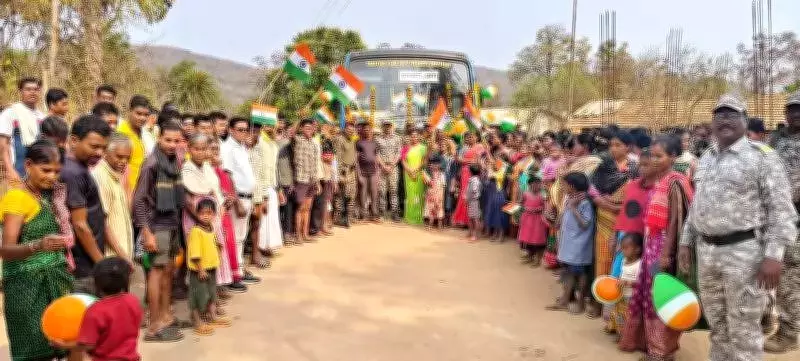
On Tuesday, the state-run bus received a traditional welcome in Tumarkothi that turned into a community celebration. Villagers played folk instruments, performed traditional dances, and expressed joy as the vehicle entered their village for the first time. Schoolchildren waved the tricolour and joined in the festivities, transforming the occasion into a festival of hope and normalcy.
Police Sub-Inspector Gorakhnath Surase, in charge of the Tumarkothi outpost, formally flagged off the bus by waving the green flag under the guidance of Gadchiroli SP Neelotpal. The ceremony was attended by approximately 300 villagers, including Gram Panchayat member Bhagyashree Lekami, village patil (village police warden) Ramji Mattami, Chinna Mattami, Raju Gawde, and school teacher Rama Lekami.
Practical Benefits for Remote Communities
The new bus service is expected to directly benefit approximately 500 people in this cluster of remote hamlets, significantly easing access to education, healthcare, markets, and government services. A senior police official emphasized the practical impact, stating, "Students will no longer miss classes due to the lack of transport, and daily commuters will be spared the exhausting treks that were once necessary for basic travel."
This launch follows similar pioneering bus services introduced over the past year on routes including Gatta-Gardewada-Wangeturi, Katezari-Gadchiroli, and Markanar-Aheri—all located within what was previously known as the red corridor of Maoist influence.
Collaborative Effort Behind the Milestone
The successful implementation of the bus service involved coordinated efforts from multiple agencies. Additional SPs M. Ramesh, Kartik M. (Aheri), Gokul Raj G., and Vishal Nagargoje played key roles alongside other officers, CRPF personnel, and local staff in making the service operational.
This historic connectivity milestone represents more than just transportation—it symbolizes the gradual return of normalcy and development to a region that has long been isolated by conflict. As Gadchiroli district continues its transformation from a guerrilla hub to a connected community, the bus service to Tumarkothi stands as a tangible marker of progress 79 years after independence.






