

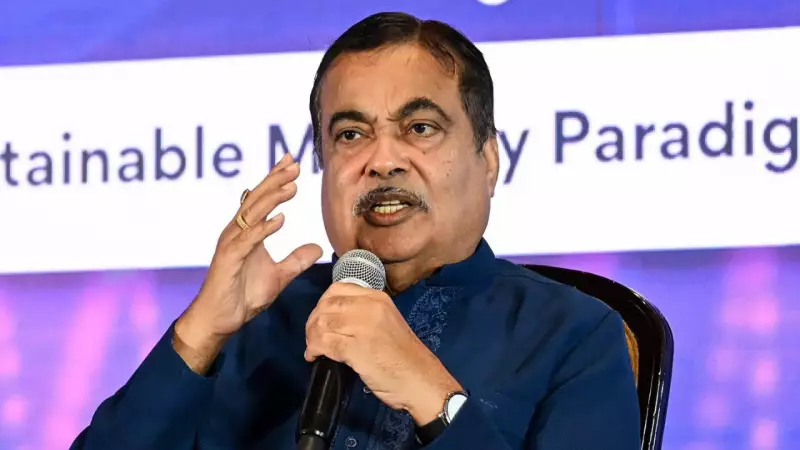
Union Minister for Road Transport and Highways, Nitin Gadkari, has taken a stern stance against the alarming rise in fatal sleeper bus fires, directing state governments to launch thorough investigations into alleged corruption and regulatory violations. This directive comes in the wake of six devastating incidents that claimed 145 lives within just three months in states including Rajasthan and Andhra Pradesh.
Crackdown on Sleeper Bus Irregularities
Addressing the media after a two-day national meeting on transport and road safety, Gadkari revealed disturbing findings. "We have found that there was no compliance of norms in building sleeper buses," he stated. The minister highlighted a web of malpractices, including fraudulent use of reputed brand logos and corruption at multiple levels involving bus body builders and the authorities responsible for vehicle registration and fitness certification.
Gadkari has written specifically to the Rajasthan government and others, urging them to investigate these irregularities and take exemplary action against all responsible parties. To prevent future tragedies, the government has decided that sleeper coach buses can only be manufactured by accredited automobile companies or facilities approved by the Centre.

Furthermore, existing sleeper buses will be required to undergo mandatory retrofitting with several critical safety features:
- Fire detection and suppression systems
- Clearly marked emergency exits with break-glass hammers
- Emergency lighting systems
- Driver drowsiness detection and alert systems
A Tech-Driven Future for Road Safety: V2V Communication
In a parallel move to enhance overall road safety, Gadkari announced a significant technological advancement. The government is preparing to introduce Vehicle-to-Vehicle (V2V) communication technology, starting with passenger cars. The Department of Telecommunications (DoT) has agreed in-principle to allocate the 5.875-5.905 GHz spectrum band for this purpose.
This wireless system will allow vehicles to communicate directly with each other, sharing real-time data such as:
- Speed and sudden deceleration (braking)
- Precise location
- Acceleration patterns
- Presence in blind spots
For instance, if a car ahead applies sudden brakes, following vehicles will receive an instant alert, allowing drivers to react proactively even before visually perceiving the danger, thereby preventing potential collisions.
Implementation Roadmap and State Action
Road Transport Secretary V Umashankar, who also addressed the press, expressed confidence that the standards and system for V2V technology would be finalized by the end of this year. Initially, the feature will be voluntary for new cars through an On-Board Unit (OBU) costing approximately Rs 4,000. The plan is to subsequently allow retrofitting in existing vehicles and eventually make the technology mandatory for all cars, trucks, buses, and other large vehicles.
Emphasizing the gravity of the bus fire issue, Secretary Umashankar has separately written to the Chief Secretaries of all states, urging them to address the problem systematically and fix responsibility. The central message from the ministry is clear: a combination of stringent action against corruption, enforced safety norms, and cutting-edge technology is essential to safeguard lives on Indian roads.






