

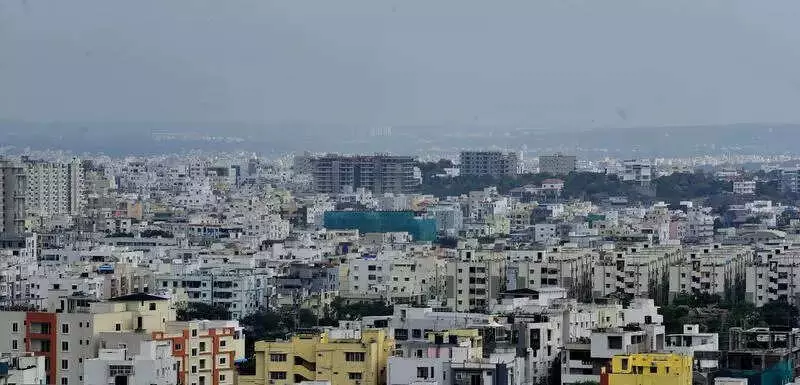
The ambitious expansion of the Greater Hyderabad Municipal Corporation (GHMC), intended to bring governance closer to the people, has ironically resulted in pushing basic civic services further away for thousands of residents. Instead of easier access, citizens from newly merged areas now face arduous journeys spanning dozens of kilometers to reach municipal offices for routine administrative work.
Long Commutes Replace Local Access
Following the administrative reorganization of the GHMC's jurisdiction, residents from several former municipalities are confronting significant logistical challenges. To reach their designated circle offices, people must now travel between 10 and 15 kilometers. Accessing a zonal office involves a trip of over 25 km. For matters that require a visit to the GHMC headquarters at Lower Tank Bund, the distance can stretch up to a staggering 50 km for some.
Specific examples highlight the severity of the issue. A resident of Jawaharnagar, which was once an independent municipality, must cover nearly 12 km to get to the Keesara circle office. Wards like Shamirpet and Yapral are situated more than 15 km from their administrative centers. Even parts of the older city are affected; Fatehnagar is almost 10 km away from its assigned circle office in Bowenpally, which itself falls under the Secunderabad zonal office.

Daily Hardships and Lost Productivity
The practical impact on daily life is severe. Simple civic tasks—such as lodging a complaint about garbage or drainage, following up on a building application, or attending an official hearing—have transformed into major expeditions. These journeys entail extra travel costs, consumption of fuel, and the loss of precious working hours, creating a new barrier between citizens and their municipal administration.
"Earlier, we could simply walk or take a short bike ride to the municipal office. Now, a single visit means losing half a day and spending money on travel," explained Srinivas Reddy, a resident of Jawaharnagar. He added that even for a minor issue like a blocked drain, a long journey is now mandatory.
Centralization Instead of Decentralization
Residents argue that the restructured system has achieved the opposite of its stated goal of decentralization. The lack of adequate sub-offices, ward-level facilitation centers, or fully functional digital grievance portals has effectively centralized services, making them harder to reach.
The problem is acutely felt in areas like Pocharam. "For zonal-level issues, we have to travel more than 30 km to reach Uppal. If the matter has to be escalated to headquarters, the journey is 50 km. This is not decentralization; it is centralization," stated Ramesh Kumar, a Pocharam resident. This situation poses a particular challenge for the elderly, women, and persons with disabilities, for whom long-distance travel is a significant hardship.
While online systems are promoted as an alternative, citizens report that many administrative and grievance redressal processes still necessitate a physical presence with documents, rendering digital solutions incomplete. The current scenario leaves residents of the expanded GHMC limits struggling to access the very basic municipal services that the reorganization was supposed to streamline and improve.






