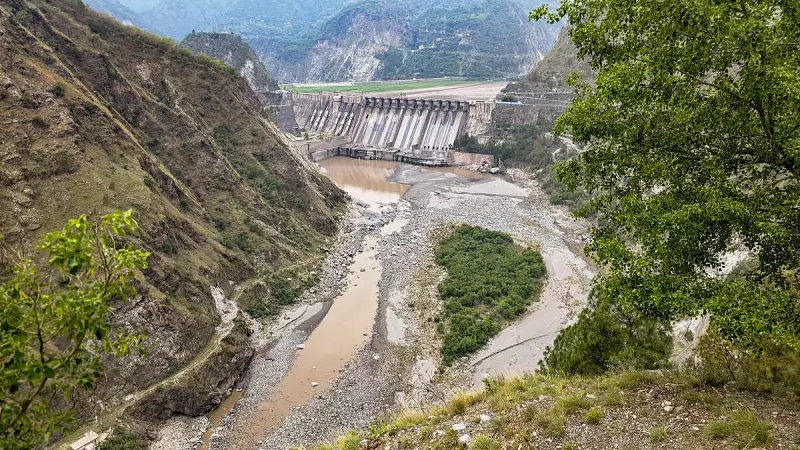
In a significant move for India's renewable energy sector, the central government's environmental authority has granted a crucial approval for a major hydropower initiative in Jammu and Kashmir. The decision paves the way for the development of the Dulhasti hydroelectric power project, which will be situated on the Chenab river.
Project Details and Strategic Importance
The approval, granted on 27 December 2025, marks a pivotal step forward for the Dulhasti hydel power project. This project is part of India's broader strategy to harness its hydropower potential while operating within the framework of international agreements. The Chenab river, a major tributary of the Indus system, is the chosen site for this development, highlighting the strategic and technical considerations behind the location.
The project's advancement occurs within the context of the longstanding Indus Water Treaty (IWT). This treaty, a water-sharing agreement brokered by the World Bank in 1960, delineates river rights between India and Pakistan. According to the treaty's provisions, Pakistan holds rights over the waters of the Indus, Jhelum, and Chenab rivers. Conversely, India has full rights to utilize the waters of the Ravi, Beas, and Sutlej rivers. The Dulhasti project's design and parameters are carefully formulated to comply with the treaty's specifications, which allow India certain permissible uses of the western rivers, including run-of-the-river hydropower generation.

Navigating the Indus Water Treaty Framework
The green signal from the expert appraisal committee is not merely an environmental clearance; it is a carefully considered decision that factors in geopolitical sensitivities. The Indus Water Treaty has been a cornerstone of water diplomacy in the region for over six decades. India's approach to projects on the Chenab, such as Dulhasti, involves strict adherence to the treaty's technical guidelines, which govern aspects like pondage capacity and design.
This approval indicates that the project authorities have successfully addressed the environmental and regulatory concerns raised during the evaluation process. The focus is on sustainable development that minimizes ecological impact while contributing to the national grid. The power generated from this project is expected to bolster energy security in the northern region and contribute to India's clean energy targets.
Implications and Future Outlook
The nod for the Dulhasti project is a clear indicator of India's intent to continue developing its hydropower resources within the established legal framework. It underscores a commitment to energy independence and infrastructure development in the region. Such projects are vital for economic growth and provide a stable source of renewable power, reducing reliance on fossil fuels.
While the approval is a domestic procedural milestone, it is executed with an awareness of its international dimension due to the treaty involved. The development is likely to be monitored closely, emphasizing the balance India maintains between sovereign development rights and international treaty obligations. The move is expected to accelerate further planning and construction activities for this key infrastructure asset on the Chenab river.