

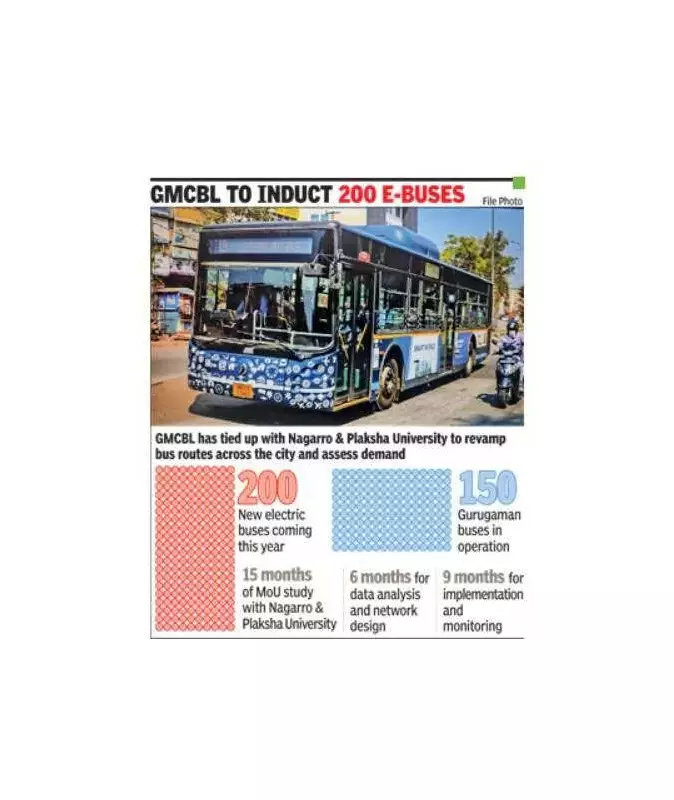
In a significant move to overhaul its public transport system, Gurugram Metropolitan City Bus Limited (GMCBL) has joined forces with a leading IT firm and a university to scientifically redesign its city bus operations. This initiative comes just ahead of the planned induction of 200 new electric buses into the Gurugaman fleet this year.
A Tripartite Pact for Smarter Mobility
GMCBL has signed a 15-month memorandum of understanding (MoU) with IT services company Nagarro and Plaksha University. The collaboration aims to conduct a comprehensive study to optimise and rationalise the existing bus network. The goal is to shift towards evidence-based planning, moving away from guesswork to data-driven decisions.
A senior GMCBL official stated that the objective is to optimise current infrastructure and create a more accessible, efficient, and commuter-centric public transport system for Gurgaon. The study is seen as a crucial step to cater to a wider section of the city's population through the Gurugaman service.

The Blueprint for the Study: Data, Demand, and Design
Under the MoU, Plaksha University, in partnership with mobility planning firm Street Surge, will lead the technical and academic aspects of the project. Nagarro is supporting the initiative under its corporate social responsibility (CSR) wing.
The exercise will focus on several key areas:
- Restructuring existing bus routes to improve efficiency.
- Identifying high-demand corridors where services need to be intensified.
- Planning for fleet expansion, especially with the 200 new e-buses, to enhance coverage and frequency without creating duplication.
- Conducting a city-wide travel demand assessment using big geospatial data and passenger surveys.
- Examining better integration with metro stations and other transport modes to solve last-mile connectivity issues.
Officials explained that operational and ridership data from GMCBL will be digitised and analysed to understand granular usage patterns. This will help identify why some routes have uneven ridership while large residential, industrial, and corporate clusters remain poorly connected.
Phased Implementation for a Replicable Model
The project will unfold in two main phases. The first six months will be dedicated to intensive data analysis, network design, and planning. The following nine months will focus on providing support for implementation and monitoring the proposed changes. This phased approach is designed to allow for course corrections based on commuter feedback and operational realities.
Dr. Anupam Sobti from Plaksha University highlighted the project's broader potential, suggesting it could serve as a replicable model for scientific bus route planning in other cities across Haryana.
Currently, GMCBL operates around 150 Gurugaman buses across the city. Instead of merely expanding services on the current network, the agency is taking a step back to re-evaluate the entire route planning framework. This strategic rethink, powered by technology and academia, aims to ensure that the addition of 200 electric buses translates into a genuinely improved commuting experience for Gurgaon's residents.






