Haryana Government to Launch Land Acquisition for Gurgaon's 24-Meter Roads, Bill Sent to Builders
In a significant infrastructure announcement, Haryana Chief Minister Nayab Singh Saini declared on Monday that the state government will initiate land acquisition to develop long-pending 24-meter-wide roads in Gurgaon's licensed colonies. The substantial costs incurred for both acquisition and development will be recovered directly from the concerned builders and developers.
Addressing Decades of Infrastructure Neglect
Speaking during his budget address, Chief Minister Saini outlined a permanent solution to the chronic problem of narrow access roads, with implementation targeted for the 2026–27 fiscal period. He highlighted that hundreds of licensed colonies across the city currently depend on access roads that dangerously narrow to just two karam (approximately 3.3 meters) at certain stretches and four karam (about 6.7 meters) at others. This inadequate infrastructure has created severe hardships for lakhs of residents, impacting daily commutes, emergency services, and overall quality of life.
Historical Planning Failures and Policy Shortcomings
Saini traced the root of the problem to urban planning oversights. Under the Master Plan 2001, the Haryana Shahari Vikas Pradhikaran (HSVP) had systematically acquired land and developed 18-meter internal roads across various sectors. However, when Master Plan 2021 was implemented in 2007, Gurgaon was experiencing rapid expansion, yet the new plan crucially lacked provisions to expand these roads to the necessary 24-meter width for internal sectors. Compounding this error, the cost of such land acquisition was never incorporated into the external development charges (EDC) levied on private developers.

The Chief Minister further noted that although a transferable development rights (TDR) policy was introduced in 2016 to bridge this infrastructure gap, it ultimately failed to deliver the desired outcomes. A revised TDR policy in 2021 has, to date, yielded a meager 140 acres for road development—a fraction of what is required.
Questioning Previous Government's Licensing Approach
In a pointed critique of the previous administration's methodology, Saini emphasized that land acquisition costs for essential 24-meter roads were never factored into the calculations while granting development licences. This oversight has left numerous colonies, particularly those situated between sectors 58 and 115, without proper access infrastructure. "The government will now initiate land acquisition for developing the pending 24-meter roads. The expenditure incurred on acquisition and development will be recovered from the builders concerned," he firmly stated.
Persistent Resident Concerns and Legal Action
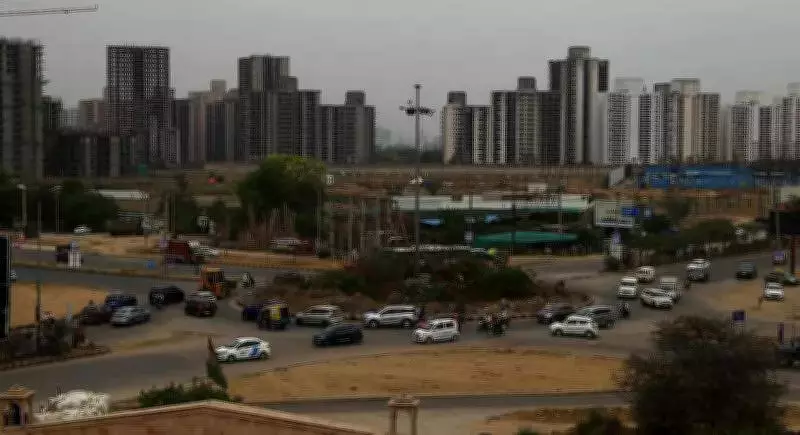
The absence of properly planned 24-meter roads has remained a persistent and critical concern, especially in Gurgaon's newer sectors. The issue reached a legal crescendo in October last year when frustrated residents approached the Punjab and Haryana High Court, seeking judicial directions for the construction of both 24-meter and 30-meter internal roads.
Residents have consistently reported that the missing road links have:
- Severely hampered smooth connectivity between neighborhoods.
- Caused dangerous delays for ambulance and fire emergency services.
- Created significant dust pollution and public safety hazards.
- Prevented the laying of basic utility services, like water pipelines, in some societies.
Fragmented Development Model and Its Consequences
Under the framework of the Gurgaon-Manesar Master Plan 2031, government agencies were assigned the task of building 60-meter sector-dividing roads. Conversely, the responsibility for constructing the crucial 24-meter internal sector roads was delegated to private developers. This model mandated that each developer only construct the portion of road falling within their specific licensed area.
This fragmented approach has resulted in a patchwork of disconnected development. Different builders have constructed stretches at varying times, while significant gaps persist where licences were never issued or projects stalled indefinitely. Consequently, several colonies remain dependent on poorly maintained revenue roads or completely unpaved passages.

Resident Reactions: Cautious Optimism and Vigilance
The government's announcement has been met with cautious optimism by resident welfare groups, who term the acquisition plan a long-awaited and necessary intervention. "The construction of 24-meter roads will not only make life easier for lakhs of families but will also ensure structured development of new sectors. Land that was previously ineligible for licensing can now be opened up for residential projects, generating revenue for the government. This decision is a win-win for both the public and the state," said Sunny Daultabad, convener of the Dwarka Expressway Gurugram Development Association.
However, residents have made it clear that their advocacy will not cease with the announcement. They plan to monitor the implementation phase closely. "Our struggle will continue until actual construction begins on the ground," asserted Sunil Sareen, co-convener of a prominent citizens' group, highlighting the community's determination to see tangible results.