Idukki Hydroelectric Project Reaches 50-Year Milestone as Kerala's Power Pillar
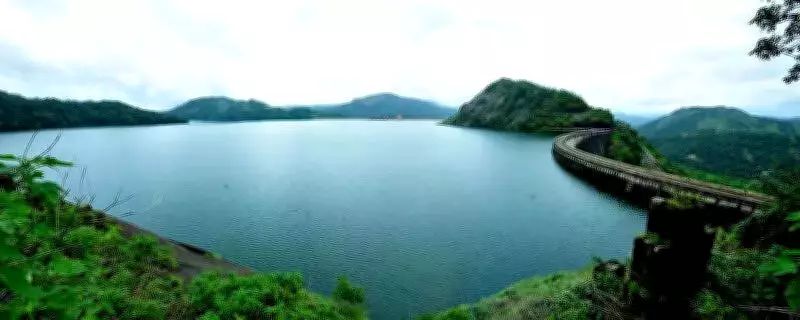
The Idukki hydroelectric project, an iconic engineering feat nestled between the Kuravan and Kurathi hills, is celebrating its 50th anniversary this year. This monumental complex, comprising India's first arch dam—the Idukki Arch Dam—along with the Cheruthoni and Kulamavu dams built across the Periyar River, stands as Kerala's foremost source of hydroelectric power.
A Legacy of Power and Progress
Since its dedication to the nation on February 12, 1976, by then Prime Minister Indira Gandhi, the project has been a cornerstone of Kerala's development. Originally, plans were set to commemorate its golden jubilee with the commissioning of the Idukki Extension Project. However, this initiative has yet to commence, leaving the milestone without its intended expansion.
Despite this setback, the Kerala State Electricity Board (KSEB) has organized a series of events to honor the project's half-century of service. An administrative sanction of Rs 16 lakh has been approved for the celebrations, which will include a reunion of former officials and workers who contributed to the project across various phases.

The Stalled Extension and Its Implications
The extension project, first proposed during the initial tenure of the Pinarayi government, envisioned the installation of four generators, each with a capacity of 200 MW. This upgrade would have elevated the Idukki hydroelectric project's total power generation from 780 MW to 1,580 MW, significantly alleviating the state's power shortages.
Regrettably, progress has been hampered, with 10 out of 12 required approvals still pending. The state government assigned Wapcos, an agency under the Union Ministry of Jal Shakti, to prepare a detailed project report and secure necessary permissions. Power Minister K Krishnankutty recently informed the assembly that procedural steps are underway, noting that the draft environmental impact assessment is complete and the project has received first-stage green clearance from the Union Ministry of Environment, Forest and Climate Change.
Historical Roots and Engineering Brilliance
The origins of the hydel project trace back to 1932 when W J John, superintendent of Malankara Estate, explored the region during a hunting expedition. Accompanied by Karuvellayan Kolumban, leader of the Urali tribal community, John was introduced to the Kuravan-Kurathi hills and the Periyar River. This encounter led him to analyze the area's hydroelectric potential, and with assistance from his brother, a civil engineer, he submitted a report to the erstwhile Travancore government on the feasibility of constructing an arch dam.
Subsequent proposals, including one from Italian engineers Angelo Omedayo and Clantheyo Masele in 1937, did not advance. It was not until 1947 that P Joseph, an electrical engineer with the Travancore government, recommended linking the Periyar and Cheruthoni rivers with a dam, based on John's findings. The dam's design was finalized 14 years later, with construction beginning in 1963. In 1966, the Canadian government provided assistance under the Colombo Plan, facilitating the project's completion.
Architectural Marvel and Operational Design
The Idukki dam was constructed alongside the Cheruthoni and Kulamavu dams to regulate the Periyar River. The arch dam's innovative design allows for a horizontal movement of 23-40 mm when the reservoir reaches full capacity, enhancing its resilience against earthquakes. Notably, the Idukki dam lacks shutters; water release is managed through the Cheruthoni dam's shutters.
The Cheruthoni dam prevents stored water from flowing out via the Cheruthoni River, while the Kulamavu dam mitigates water loss through the Kilivallithodu stream. Power generation occurs at the Moolamattom Powerhouse, situated 750 meters beneath the Nadukani hills, making it the largest underground hydroelectric power station in India.
Expert Insights and Future Prospects
K K Karuppankutty, the only KSEB chief engineer to oversee both the dams and the powerhouse, retired in 2014 as a member of KSEB's generation board. He described the Idukki hydel project as "a remarkable engineering marvel," underscoring its significance in Kerala's energy landscape.

Jumaila Beevi, executive engineer of the Idukki Project Generation, emphasized the project's critical role, stating, "The role played by the Idukki hydel project in sustaining KSEB and in strengthening the state's power sector is significant."
As Kerala continues to rely on its power infrastructure, the Idukki project remains a testament to engineering excellence and a vital component of the state's energy matrix.