

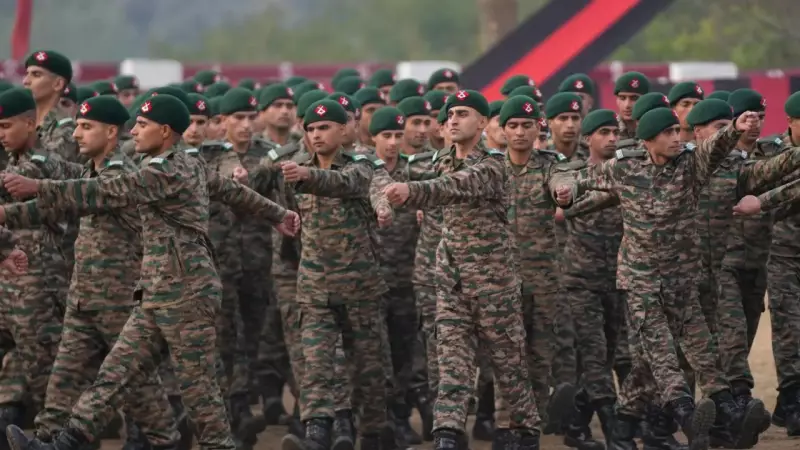
In a significant policy shift, the Indian Army has decided to relax its stringent, blanket prohibitions on social media usage for its personnel. The new directives permit the army's vast force of over 11.5 lakh soldiers to use several popular platforms, albeit within a tightly controlled and limited framework designed to safeguard national security.
What Does the New Policy Allow?
The revised guidelines introduce a tiered approach to access, distinguishing between passive consumption and active interaction. For platforms like YouTube, X (formerly Twitter), Quora, and Instagram, soldiers are only permitted "passive participation." This means they can browse these sites to "obtain knowledge or information" but are strictly prohibited from uploading any user-generated content, posting messages, or leaving comments.
Specifically for Instagram, access is granted solely for "purposes of viewing and monitoring." Posting personal views or engaging with content via comments remains off-limits for military personnel under this policy.

Guarded Communication on Messaging Apps
The policy also opens a controlled channel for communication on popular messaging applications. Soldiers can now use Skype, WhatsApp, Telegram, and Signal for the "exchange of unclassified information of a general nature or content." However, this permission comes with a critical caveat.
"Information or content can be exchanged only with known persons. The responsibility for correctly identifying the recipients will lie with the users," clarified an army officer. This rule places the onus on individual soldiers to ensure they are not inadvertently sharing information with unknown or potentially malicious entities.
Professional Use of LinkedIn
The professional networking site LinkedIn receives a special mention in the new framework. Personnel are allowed to use the platform, but its utility is restricted to two core professional functions: uploading a resume and obtaining information on potential employees or employers. This move is seen as aiding soldiers in career planning and post-service transition, while minimizing operational security risks.
Background of Strict Controls and the Rationale for Change
The armed forces have historically maintained an extremely strict stance against social networking sites to prevent any possible compromise of classified information. In the past, this vigilance even extended to directives for officers and soldiers to delete their Facebook and Instagram accounts entirely.
The decision to recalibrate this absolute ban likely stems from a recognition of the evolving digital landscape and the practical need for personnel to stay informed and connected in a controlled manner. The new policy attempts to strike a delicate balance between enabling necessary digital access and enforcing iron-clad security protocols to protect sensitive military data from cyber threats and espionage.
The rollout of these revised guidelines marks a pragmatic evolution in the Indian Army's approach to digital tools, moving from outright prohibition to managed, responsible usage for its over 1.15 million-strong force.






