

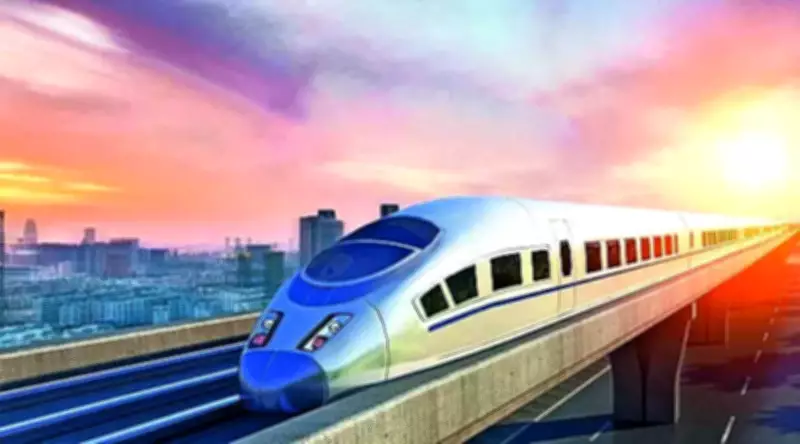
India's Indigenous Bullet Train Project Takes Major Step Forward
The Indian Railways has officially confirmed that the first operational stretch of the ambitious Ahmedabad-Mumbai bullet train corridor will utilize the domestically manufactured B28 trainset. This landmark decision marks a significant milestone in India's journey toward high-speed rail technology indigenization.
Parliamentary Panel Receives Detailed Update
In a comprehensive report tabled before both Houses of Parliament on Tuesday, the railway ministry informed the parliamentary standing committee on railways about the updated timeline and operational plans for the Mumbai-Ahmedabad High-Speed Rail (MAHSR) project. The ministry emphasized that the bullet train initiative represents an exceptionally complex and technology-intensive undertaking involving substantial international collaboration and technology transfer from Japan and other nations.
The ministry specifically stated: "Bullet train project is a very complex and technology intensive project. The project involves technology transfer and procurement/supply from Japan and other countries. The development of the E10 series of Shinkansen is underway in Japan; therefore, detailed information regarding the same is not available. However, a decision has been taken to start the operation using B28 (Bharat made bullet trainset)."

Operational Timeline and Technical Details
According to the parliamentary report, the railway ministry is targeting August 2027 for commencing operations on the 97-kilometer Surat to Vapi section using the B28 trainset, which is currently under manufacturing at Bharat Earth Movers Limited (BEML). This Indian-made bullet train will operate at speeds up to 280 kilometers per hour.
The ministry further informed the panel that tenders for alternative signaling systems based on European Train Control System Level 2 (ETCS L2) have already been awarded, with work having commenced. However, the ministry clarified that definitive timelines for the full project commencement can only be established after completing all associated works, including:
- Civil structure construction
- Track laying and alignment
- Electrical systems installation
- Signaling and telecommunication infrastructure
- Complete supply of trainsets
Substantial Cost Escalation Explained
The railway ministry provided the parliamentary committee with a detailed breakdown of the significant cost escalation since the project's original estimate of ₹97,636 crore in December 2015. The ministry explained that the initial feasibility report did not account for several critical factors that have substantially increased project costs:
- Taxes and cess: ₹29,330 crore
- Utility shifting: ₹2,625 crore
- Station approach development: ₹2,195 crore
- Power sourcing arrangement: ₹1,250 crore
- Indigenous trains and ETCS signaling system: ₹16,500 crore
- Ticketing systems: ₹283 crore
- Statutory charges for forest clearances: ₹400 crore
Additionally, the ministry cited economic factors contributing to the cost increase, including inflation and price rise amounting to ₹19,084 crore since the project's sanction in 2015. A substantial increase in land rates, particularly in urban areas including Mumbai, has escalated land acquisition, resettlement, and rehabilitation costs to ₹16,695 crore.
The ministry confirmed that the revised cost estimate for the Mumbai-Ahmedabad High Speed Rail Line is currently under sanction, reflecting these comprehensive adjustments to the project's financial framework.
This development represents a crucial advancement in India's infrastructure capabilities, combining international high-speed rail technology with domestic manufacturing expertise to create a transportation system that could transform connectivity between two of the country's most important economic hubs.






