

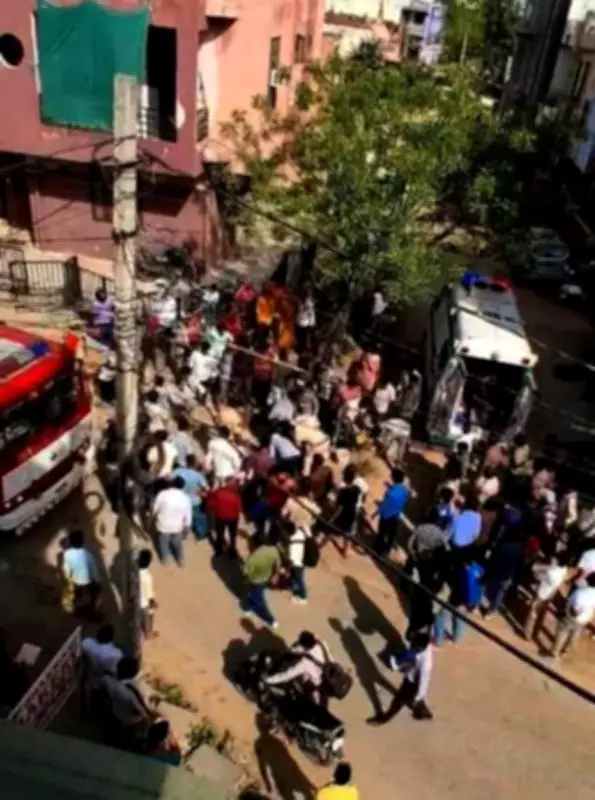
Jaipur Sewer Tragedy Exposes Systemic Failures in Municipal Oversight
The tragic deaths of two workers during sewer cleaning operations in Jaipur's Jhotwara area on April 17 have cast a harsh spotlight on the Jaipur Municipal Corporation's monitoring systems. An initial investigation has identified poor supervision of outsourced agencies as a primary factor in this preventable loss of life.
Contractor Supervision Gap Despite Legal Ban
Municipal officials have acknowledged that the civic body failed to adequately oversee private contractors engaged for sewer maintenance across the city. This failure persists despite a clear legal prohibition against manual sewer cleaning under the Prohibition of Employment as Manual Scavengers and Their Rehabilitation Act of 2013.
"There is no shortage of sewer-cleaning machines in Jaipur, but the problem lies in their poor utilisation," revealed a senior JMC official. "The corporation lacks an effective monitoring mechanism to track whether contractors are following safety norms and using machines as required. Responsibility must be fixed on both officials and contractors to prevent such deaths."

Multiple Investigations Launched Following Incident
The incident has triggered parallel responses from multiple authorities. The Union Ministry of Social Justice and Empowerment has intervened alongside the Rajasthan State Human Rights Commission, with both bodies directing the district collector and JMC commissioner to conduct separate, thorough investigations.
Simultaneously, the JMC has established a four-member committee specifically tasked with examining why manual cleaning procedures were employed in violation of established safety protocols. "The committee has been asked to submit its report within seven days. Let them submit the report," stated JMC commissioner Om Prakash Kasera, indicating the urgency with which the corporation is approaching this matter.
National Context of Manual Scavenging Violations
This case represents yet another violation of the 2013 legislation that explicitly bans hazardous sewer and septic tank cleaning while prescribing penalties for violations. The law mandates prior written permission for any manual intervention in such dangerous environments, requirements that appear to have been disregarded in this instance.
Officials cited alarming national statistics revealing 622 deaths during sewer and septic tank cleaning operations between 2017 and March 17, 2026. Rajasthan ranks among the ten worst-affected states in this grim tally, having recorded 37 such fatalities during this period.
The persistent recurrence of these incidents despite legislative protections highlights systemic failures in implementation and enforcement. The Jaipur tragedy underscores how outsourcing critical municipal functions without corresponding oversight mechanisms can have deadly consequences for vulnerable workers.






