

While the rest of Kamptee town celebrated the takeover of its newly elected local self-government last week, a significant portion of its residents continue to wait for their democratic voice. The Kamptee Cantonment Board, governing several civilian pockets, has been operating without elected representatives for the past four years, a situation mirrored in other cantonments across India.
Four-Year Wait for Democratic Process
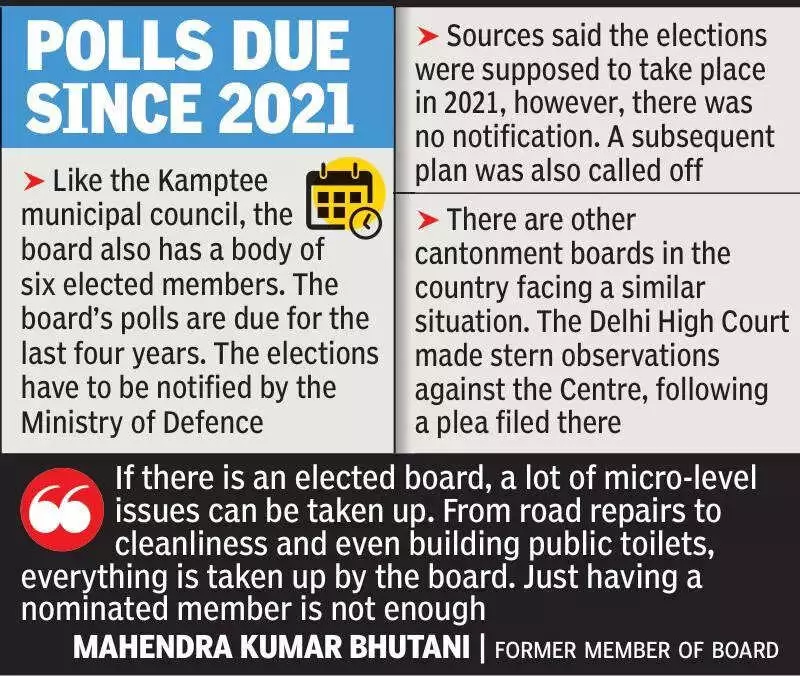
The Kamptee Cantonment Board, much like the municipal council, is supposed to have a body of six elected members. However, the polls for these positions are overdue for the last four years. The crucial step of notifying these elections falls under the purview of the Ministry of Defence. According to sources, the elections were initially slated for 2021, but no official notification was issued. A subsequent plan to conduct the polls was also shelved, leaving the process in indefinite limbo.
This delay is not an isolated incident. Several other cantonment boards in the country find themselves in a similar predicament, prompting legal scrutiny. The Delhi High Court recently made stern observations against the Central government following a plea highlighting this widespread issue.

Governance by Nomination, Not Election
In the absence of an elected board, the Kamptee cantonment is currently administered by a governing body that includes a nominated member, the board's CEO, and the station commander, who is an Army official. Residents and former board members argue that this setup is insufficient for addressing grassroots concerns.
Mahendra Kumar Bhutani, a former member of the board, emphasized the need for elected representation. "If there is an elected board, a lot of micro-level issues can be taken up. From road repairs to cleanliness and even building public toilets, everything is taken up by the board. Just having a nominated member is not enough," Bhutani stated.
The areas under the cantonment board's jurisdiction include Mall Road, the bungalow area, Unthakhana, Choti Ajni, Godam, Kamseri Bazaar, and Gora Bazaar, encompassing a population of approximately 6,300 people.
The Excision Plan and an Uncertain Future
Amidst the election deadlock, the government is also working on the excision of the Kamptee cantonment. This process, to be undertaken jointly by the Ministry of Defence and the state's Urban Development Department (UDD), involves bringing civilian areas out of the board's control. It is part of the Centre's larger initiative to dismantle the British-era cantonment board system and replace it with a local military authority.
However, this potential solution also remains in a state of uncertainty. Even though a draft has been submitted, no final decision on excision has been made yet. Consequently, the residents of Kamptee's cantonment areas remain caught between a delayed democratic process and an unresolved administrative overhaul, their local issues awaiting proper representation and redressal.






