

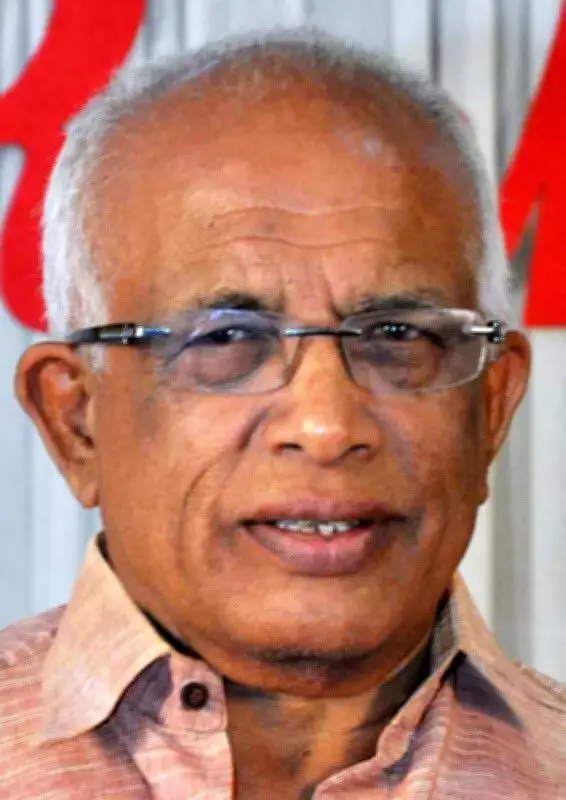
Kerala Power Minister Firmly Rules Out Load Shedding Amid Escalating Electricity Crisis
In a significant announcement, Kerala's Electricity Minister K Krishnankutty has categorically stated that the state government will not implement load shedding, even as power consumption surges dramatically across the region. This declaration comes at a critical juncture when Kerala is grappling with a substantial shortfall in its contracted power supply from other states.
Mounting Demand and a Widening Supply Gap
The gap between power availability and consumption is widening at an alarming rate, Minister Krishnankutty emphasized. He highlighted that daily electricity demand is increasing by approximately 50 megawatts (MW) due to soaring temperatures, which are expected to persist until May. This relentless heatwave has pushed peak usage to unprecedented levels.
On a recent Saturday, the state's power consumption reached a staggering 117.15 million units, with demand peaking above 6,000 MW, particularly during the evening hours. This record-breaking usage underscores the severe strain on Kerala's power infrastructure.

A 200MW Deficit and Financial Constraints
Compounding the issue is a current shortfall of about 200 MW in contracted power supply from neighboring states. This deficit is projected to last for at least another week, creating a precarious situation. Purchasing electricity from the power exchange at higher rates would impose a heavy financial burden on the state, Krishnankutty noted, explaining the government's cautious approach.
To address this, the government has sought approval from the regulatory commission for long-term power purchase agreements, with a decision expected by April 22. These agreements are seen as a vital step toward securing a stable and affordable power supply in the future.
Additional Factors Exacerbating the Crisis
Several other factors are intensifying the power crisis. Due to an ongoing LPG shortage, more households are turning to induction cookers, which has significantly increased domestic electricity consumption. Furthermore, declining water levels in reservoirs—currently 37% below capacity—are severely affecting hydroelectric generation, a key component of Kerala's power mix.
Contingency Plans and Official Warnings
Despite these challenges, Minister Krishnankutty assured the public that necessary arrangements have been made to avoid power cuts. Currently, there is no situation that warrants load shedding, he asserted. However, he issued a stern warning about the prolonged heat and its impact on the power sector.
Officials from the Kerala State Electricity Board have indicated that if demand continues to surge, load regulation of up to 15 minutes during night hours might be required. This measure would be a last resort to manage the grid without resorting to full-scale load shedding.
The government's commitment to avoiding load shedding is being tested by a perfect storm of rising demand, supply shortages, and environmental factors. All eyes are now on the regulatory commission's upcoming decision and the state's ability to navigate this complex energy landscape.






