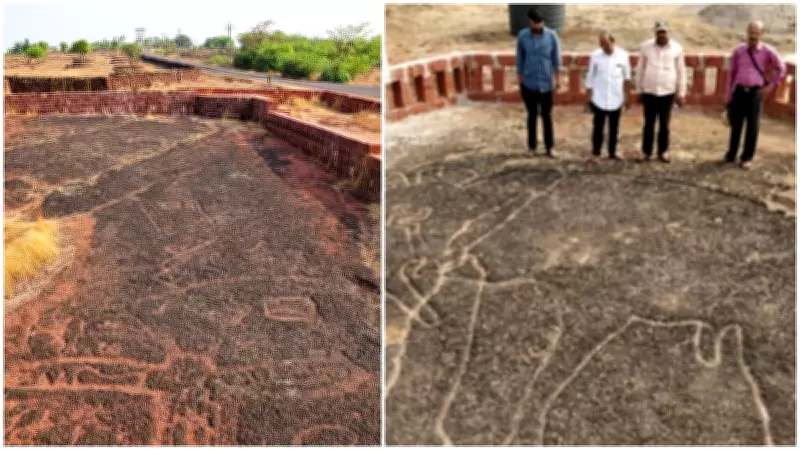
Maharashtra Mandates Safeguarding of Ancient Rock Carvings in Konkan
The Maharashtra government has announced that any new projects in the coastal Konkan region will receive environmental clearance only after ensuring the protection of ancient rock carvings found in the area. Cultural Affairs Minister Ashish Shelar stated that these prehistoric rock art sites must be comprehensively documented before any construction activity is permitted.
Documentation Requirements for Rock Art Sites
Shelar emphasized that each rock art site must be recorded through detailed audiovisual documentation from multiple distances, covering all seasons, and using advanced techniques. This includes high-resolution photography, 3D scanning, and videography to create a permanent record of the carvings. The minister noted that this step is crucial for preserving Maharashtra's cultural heritage, as the Konkan region is home to numerous petroglyphs dating back thousands of years.
Impact on Development Projects
The decision will affect various infrastructure and tourism projects planned along the Konkan coastline, including resorts, roads, and industrial developments. Developers will now need to factor in the cost and time required for documentation and protection measures. The government has not specified penalties for non-compliance but indicated that clearances will be withheld until the conditions are met.

Background of Konkan Rock Carvings
The rock carvings, also known as petroglyphs, were discovered in recent years in districts such as Ratnagiri and Sindhudurg. They depict animals, human figures, and geometric patterns, and are believed to be among the oldest known art forms in India, dating back to the Mesolithic period. Archaeological surveys have identified over 1,500 such carvings in the region, making it one of the largest concentrations of prehistoric rock art in the country.
Government's Commitment to Heritage
According to Shelar, the state government is committed to balancing development with heritage conservation. He said, "These rock carvings are an invaluable part of our history, and we must ensure they are protected for future generations. Any project that threatens them will not be allowed to proceed without proper safeguards." The minister also urged local communities to report any new discoveries of rock art to the archaeology department.