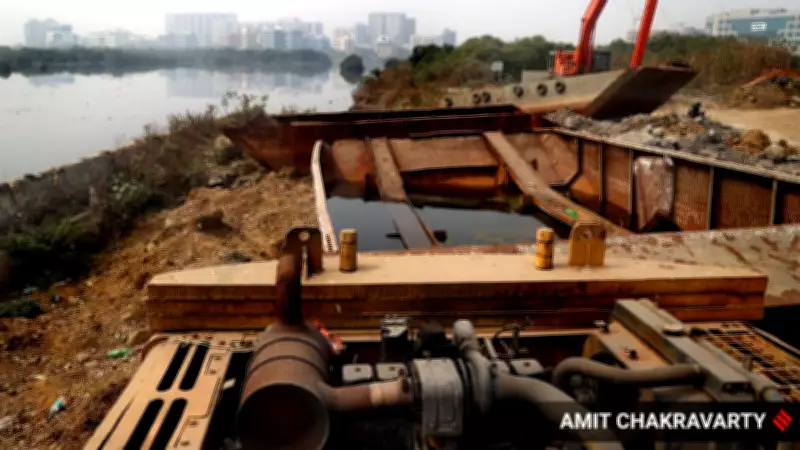
Mumbai's Mithi River Desilting Work Comes to a Complete Standstill for Half a Year
Critical flood mitigation efforts along Mumbai's Mithi River have experienced a severe disruption, with desilting operations completely ceasing across most of the river's stretches for six consecutive months. According to official data obtained from the Brihanmumbai Municipal Corporation (BMC), there was absolutely zero silt extraction and no deployment of vehicles for desilting work in eight out of the river's ten designated sections between August 2025 and January 2026.
Drastic Decline in Desilting Activity
The contrast in activity levels is stark and alarming. During the period from April to July 2025, the BMC had mobilized an impressive fleet of 9,930 trucks to remove over 168,000 metric tonnes of silt and debris from all ten stretches of the Mithi River. However, this momentum came to an abrupt halt. From August 2025 through January 2026, only 523 trucks were deployed, and they were confined to just two minor stretches: from Teacher’s Colony to Kurla Kalina bridge and from Kurla Kalina bridge to Airport box culvert. In these limited operations, only 10,530 metric tonnes of silt were extracted.
The eight stretches where zero desilting occurred include:

- Airport box culvert upstream to Bamandayapada bridge
- Bamandayapada bridge to Filterpada in Powai
- Mahim causeway to Sion Bandra Link road bridge
- Sion Bandra link road bridge to BKC connector bridge
- Tail channel behind Maharashtra Nature park to BKC connector bridge (eastern bank)
- Tail channel from Dharavi outfall to Mithi river at Sion Bandra Link Road
- Kurla to BKC connector bridge
- Vakola bridge to Mithi River
Background and Importance of Desilting
The Mithi River, Mumbai's largest river, flows 17.8 kilometers through suburban areas before emptying into the Arabian Sea. Annual desilting is a crucial activity undertaken by the BMC across Mumbai's drainage network, including the Mithi. This process involves removing accumulated silt, muck, and sediments that naturally deposit in water bodies. Effective desilting enhances water flow and increases the river's carrying capacity, which is vital for preventing waterlogging and severe flooding during the monsoon season.
The annual desilting initiative was launched following the catastrophic July 26, 2005 deluge, which highlighted the intensive flooding risks associated with the Mithi River. This measure was implemented based on recommendations from the Chitale committee to improve flood management and urban resilience.
Contractual Issues and Official Explanations
For the 2025-2026 period, the BMC had awarded a substantial work order worth Rs 90 crore to three contractors—Tridev Infraprojects, JRS Infrastructure, and Bhumika Transport—to conduct desilting along the entire 17.9-kilometer stretch of the river. The contracts were distributed in three separate packages and awarded in April 2025 for a one-year duration.
However, the project faced significant setbacks due to contractor-related issues. Senior BMC officials attributed the work stoppage to the contractors' involvement in an ongoing Enforcement Directorate (ED) investigation concerning the Mithi River, as well as blacklisting by the BMC itself. Among the three contractors, two have been implicated in criminal cases, while Bhumika Transport was blacklisted for substandard work in the city's M/East and M/West wards.
"While the work was awarded to three contractors, one was blacklisted and two others were named in criminal cases," explained a senior BMC official. "We attempted to appoint a new contractor on an emergency basis, but due to the ongoing Mithi investigation, no new contractors were willing to take on the desilting work. We then re-engaged the existing contractors, but soon their top and middle management were arrested, impacting pre-monsoon and monsoon desilting activities."
The BMC also noted that, as per contract terms, 80% of desilting is scheduled pre-monsoon, 10% during monsoon, and 10% post-monsoon. The post-monsoon work is typically intermittent and focuses on removing floating domestic waste. Officials cited this schedule and the absence of reliable contractors as reasons for the lower silt extraction figures.

Performance Against Targets and Future Plans
BMC data reveals a significant shortfall in meeting desilting targets. For the post-monsoon season, the civic body had set a goal to extract 53,578 metric tonnes of silt from the Mithi River's ten stretches. To date, only 30.14% of this target has been achieved, underscoring the extent of the disruption.
In response to these challenges, the BMC is preparing to issue fresh tenders to appoint three new contractors for the desilting work. According to senior officials, the tender documents are currently under review and are expected to be floated in the coming week. While the final cost is yet to be determined, it is anticipated to remain under Rs 90 crore.
"We are hopeful that some bidders will participate in the bidding process," stated a BMC official. "Although desilting was severely affected in the previous season, we aim to achieve our targets in the upcoming season."
Long-Term Context and Financial Investment
Desilting has been a consistent annual activity to mitigate flooding risks, even as broader efforts to curb sewage outfall and clean the Mithi River have faced delays. Data obtained through the Right to Information (RTI) Act indicates that between 2006 and 2025, the BMC has invested at least Rs 415 crore in desilting the Mithi River, highlighting the sustained financial commitment to this critical infrastructure maintenance.
The recent six-month halt in desilting operations raises serious concerns about Mumbai's preparedness for future monsoon seasons and underscores the vulnerabilities in contractor management and project execution within urban civic works.