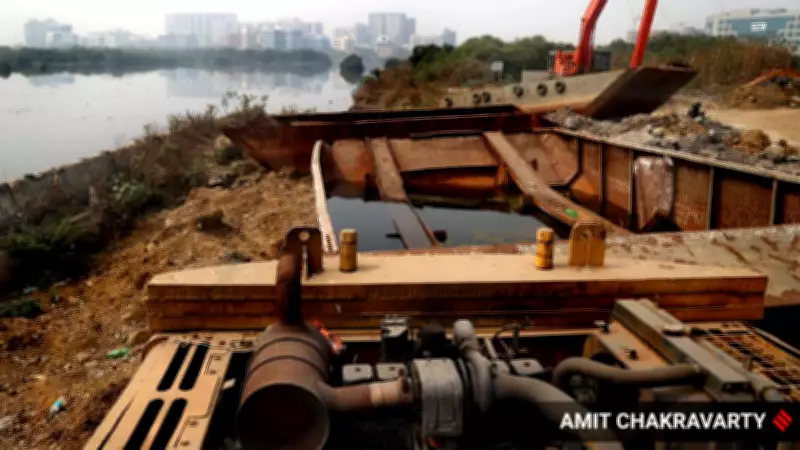
Mithi River Desilting Work Comes to a Standstill for Half a Year
In a concerning development for Mumbai's flood preparedness, desilting operations along the Mithi River have been severely disrupted over the past six months. According to data obtained from the Brihanmumbai Municipal Corporation (BMC), no desilting was conducted in eight out of the river's ten stretches between August 2025 and January 2026. During this period, the civic body reported "zero" vehicles deployed and "zero" silt extracted, marking a stark contrast to earlier efforts.
Sharp Decline in Desilting Activity
The data highlights a dramatic drop in activity. Between April and July 2025, the BMC had deployed 9,930 trucks to remove over 1.68 lakh metric tonnes of silt across all ten stretches of the Mithi River. However, from August 2025 to January 2026, only 523 trucks were used, focusing solely on two small stretches: Teacher’s Colony to Kurla Kalina bridge and Kurla Kalina bridge to Airport box culvert. These limited operations extracted just 10,530 metric tonnes of silt, a fraction of the earlier output.
Critical Role of Desilting in Flood Mitigation
Desilting is a year-round exercise crucial for flood mitigation in Mumbai. The Mithi River, the city's largest river, spans 17.8 km through suburbs before discharging into the Arabian Sea. Annually, the BMC undertakes desilting to remove silt, muck, and sediments that accumulate in water bodies. This process improves water flow and increases the river's carrying capacity, helping prevent waterlogging during the monsoon season. The initiative was launched after the devastating July 26, 2005 deluge, following recommendations from the Chitale committee to address intensive flooding risks.

Contractor Issues Halt Progress
The halt in desilting work is attributed to significant challenges with the contractors involved. For the 2025-2026 period, the BMC had issued a work order worth Rs 90 crore to three contractors—Tridev Infraprojects, JRS Infrastructure, and Bhumika Transport—to carry out desilting across the entire 17.9 km stretch in three separate packages, awarded in April 2025. However, two contractors became embroiled in criminal cases, while Bhumika Transport was blacklisted for substandard work in Mumbai's M/East and M/West wards.
Senior BMC officials explained that attempts to appoint new contractors on an emergency basis failed due to ongoing investigations into the Mithi River, deterring potential bidders. Subsequently, the existing contractors were retained, but arrests of their top and middle management further impacted operations, affecting both pre-monsoon and monsoon desilting work.
Impact on Post-Monsoon Targets
The BMC maintains that only 10% of desilting work is typically carried out post-monsoon, with 80% done pre-monsoon and 10% during the monsoon. However, data shows that the civic body has achieved only 30.14% of its post-monsoon target to extract 53,578 metric tonnes of silt from the Mithi River's ten stretches. This shortfall raises alarms, especially after flooding in August 2025 forced evacuations in the Kranti Nagar slum belt when river waters nearly breached danger levels during heavy rainfall.
Future Steps and Financial Implications
To address the contractor lacunae, the BMC plans to float fresh tenders to appoint three new contractors for desilting work at the Mithi River. The tender file is currently under review and is expected to be issued in the coming week. While the final cost is yet to be determined, officials anticipate it will remain under Rs 90 crore. The BMC hopes to attract bidders and achieve its targets in the next season, emphasizing the ongoing importance of desilting as a constant annual activity to mitigate flooding.
Long-Term Investment in River Maintenance
Despite delays in other cleanup efforts, such as curbing sewage outfall, desilting has been a consistent focus. Data obtained under the Right to Information (RTI) Act reveals that between 2006 and 2025, the BMC has spent at least Rs 415 crore on desilting the Mithi River. This substantial investment underscores the critical role of regular maintenance in safeguarding Mumbai against monsoon-related disasters, making the recent six-month halt a significant setback for urban resilience and public safety.