

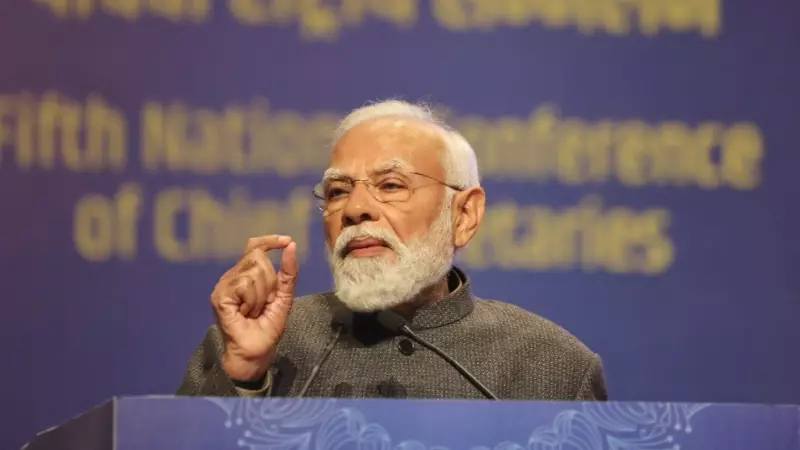
Prime Minister Narendra Modi declared on Tuesday that the outgoing year 2025 will be etched in memory as a period dedicated to continuous reforms, positioning them as a core national mission for India. He stated that his government's philosophy has been to prioritize collaboration over control and facilitation over regulation, embodying the spirit of a modern democracy.
The Philosophy and Pillars of the 2025 Reform Agenda
Modi emphasized that the significance of the 2025 reforms lies not just in their scale but in their foundational philosophy. He pointed to a comprehensive modernization of institutions, a simplification of governance, and the strengthening of pillars for long-term, inclusive growth. In a detailed post on LinkedIn, the Prime Minister urged investors to maintain their trust in India and continue investing in its people.
He identified the country's youthful demography as the primary engine driving what he termed the "Reform Express"—a phrase he introduced earlier during Parliament's winter session to underscore the commitment to swift, cross-sectoral changes.

Key Sectoral Reforms: From Nuclear to Education
The sweeping reforms enacted this year were designed with empathy for various segments of society, including small businesses, young professionals, farmers, workers, and the middle class. Modi listed several landmark measures:
- Opening up the nuclear sector to private players.
- Allowing 100% Foreign Direct Investment (FDI) in the insurance sector.
- Introducing four new labour codes to consolidate and replace 29 complex existing laws.
- Rationalizing GST slabs to reduce disputes, improve compliance, and boost consumer demand.
- Providing a substantial tax break for individuals earning up to Rs 12 lakh, which he called an "unparalleled relief for the middle class."
He asserted that these changes, shaped by consultation and data, are anchored in constitutional values. They aim to add momentum to a decade-long shift from a control-based economy to one operating within a framework of trust, with the citizen at its core.
Parliamentary Actions and Future Roadmap
Addressing specific legislative actions, Modi highlighted the passage of five new maritime laws in the monsoon session to simplify documentation, ease dispute resolution, and cut logistics costs. He also defended the government's decision to replace the UPA-era MGNREGA with the G RAM G Act, noting that the new law raises guaranteed employment from 100 to 125 days and increases spending on village infrastructure and livelihoods.
Looking ahead, Modi confirmed his government will persist with its reform agenda. Key future-oriented steps include:
- Establishing a single, unified higher education regulator called 'Viksit Bharat Shiksha Adhishthan' to replace overlapping bodies like the UGC and AICTE, aiming to strengthen institutional autonomy and boost innovation.
- Expanding the definition of "small companies" to include firms with a turnover of up to Rs 100 crore, significantly reducing compliance burdens for thousands of businesses.
- Introducing a bill to enhance governance norms in SEBI and strengthen investor protection.
- Pursuing trade deals with nations like New Zealand, Oman, and Britain to spur investment and job creation.
Prime Minister Modi concluded by framing these collective efforts as decisive steps toward building a prosperous and self-reliant India, powered by a transparent and technology-driven administration.






