The year 2025 has laid bare a deepening civic catastrophe in Mohali, where systemic planning failures have culminated in a trifecta of crises: lethal parking disputes, a perpetually absent public transport system, and mountains of uncollected garbage. The city's urban infrastructure is buckling under pressure, severely impacting the daily lives and safety of its residents.
Parking Chaos Fuels Violence and Political Debate
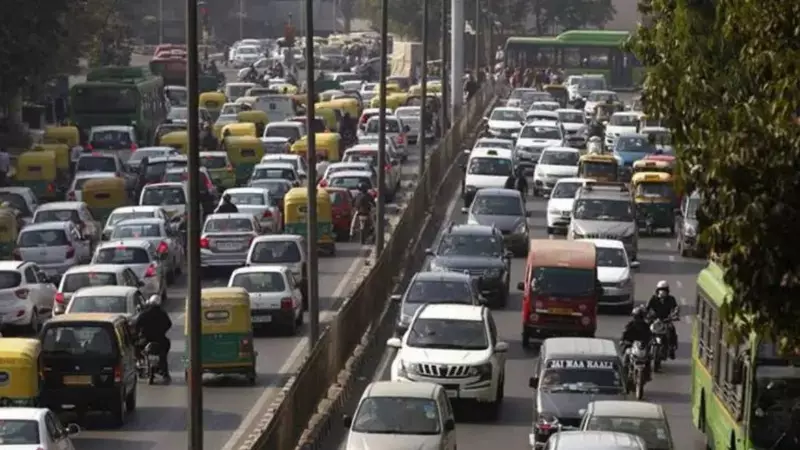
Traffic congestion and unregulated parking have escalated from mere inconveniences to sources of severe public strife across Mohali's residential sectors, markets, and arterial roads. The situation has turned alarmingly violent, with several murders in recent years linked directly to minor parking arguments. These include the killing of an advocate, the murder of an elderly man in Sohana earlier this year, and the tragic death of an IISER scientist in 2025.
The issue reached the Punjab Assembly, where Mohali MLA Kulwant Singh highlighted the problem of illegal parking outside major hospitals. While notices were issued to hospitals found using basement parking for commercial purposes, pushing vehicles onto public roads, action against prominent institutions remains pending. Markets continue to operate without basic parking demarcation, and roads like those in Phase 7 are perpetually choked by long lines of parked vehicles. Residents perceive traffic police enforcement as lax, offering little relief.
A Ghost Bus Service: Two Decades of Empty Promises
Compounding the traffic nightmare is the glaring absence of a city bus service. Despite nearly two decades of planning since 2006, Mohali failed to launch a public transport system in 2025. Multiple proposals have been drafted over the years, and the Municipal Corporation had even approved Rs 6 crore in its budget at one stage. Dedicated routes were identified, and the possibility of using CTU buses was explored, but every plan has remained confined to files.
This vacuum has granted auto-rickshaw operators a virtual monopoly, leading to inflated fares and added congestion. Poor road conditions further exacerbate daily traffic jams. Despite repeated promises in election manifestos by political parties, residents in 2025 still lack a viable alternative to private vehicles.
Garbage Crisis Chokes the City After Dumping Site Closure
Mohali's waste management system has completely broken down, adding a noxious layer to the civic emergency. The city has long struggled without a permanent dumping site, but the situation deteriorated sharply after the closure of the main dumping site at Phase 8-B in November 2024, following orders from the Punjab and Haryana High Court and the National Green Tribunal.
Since then, the Municipal Corporation has operated without any permanent waste disposal facility. Official records show that temporary garbage collection points have skyrocketed from 11 to 53, forcing residents to dump waste on roadsides and vacant plots. A proposal for a 50-acre integrated waste processing facility at Samgauli village has stalled, with access roads, boundary walls, and processing units incomplete.
Meanwhile, GMADA continues to develop new sectors without integrating solid waste management into its plans. These areas have no refuse management centres or waste transfer points, leading to unplanned dumping and open burning of garbage. This poses severe risks to public health, sanitation, and environmental safety, highlighting persistent failures in coordination and urban governance.
The collective impact of these crises paints a grim picture of urban planning in Mohali, where administrative inaction and fragmented governance have left residents to navigate a daily landscape of danger, inconvenience, and neglect.