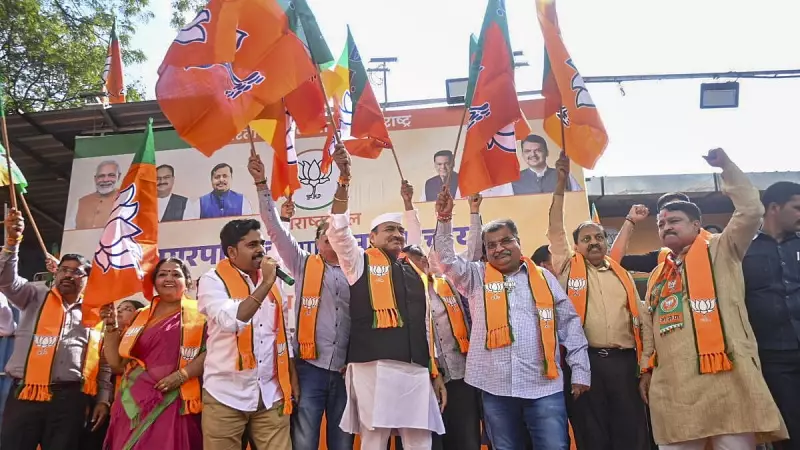
Mumbai, historically celebrated as 'Urbs Prima in Indis' or the first city of India, finds its crucial civic elections at a crossroads. The focus is drifting away from pressing governance matters towards polarising identity-based narratives.
The Stakes: A Colossal Budget and Massive Population
The Brihanmumbai Municipal Corporation (BMC) holds immense power and responsibility. It administers the twin districts of Mumbai City and Mumbai Suburban, catering to a population of over 1.3 crore (13 million) people. Its annual budget is a staggering Rs 75,000 crore plus, which is larger than the budgets of several small Indian states. This financial heft underscores why the elections to this civic body are so critical for the city's development and day-to-day life.
The Disturbing Shift in Political Discourse
Traditionally, civic polls in Mumbai revolved around local issues: pothole-ridden roads, water supply, sanitation, public health, and urban planning. However, recent trends indicate a significant shift. The political discourse is increasingly being framed around binary identity issues. This move sidelines essential debates on administrative efficiency, fiscal management, and infrastructure projects that directly impact millions of Mumbaikars.
Analysts observe that this drift reduces complex urban challenges to simplistic us-versus-them narratives. Instead of competing on visions for solving Mumbai's chronic issues, political campaigns risk becoming battlegrounds for broader, divisive agendas. This trend is alarming for a metropolis that prides itself on its cosmopolitan character and economic significance.
Implications for India's Premier Metropolis
The consequences of this shift are profound. When identity politics takes centre stage, governance often takes a backseat. The city's massive budget requires prudent and transparent management, focused on long-term projects and equitable service delivery. A campaign dominated by polarising rhetoric can lead to a fractured mandate and hinder decisive administrative action.
For the residents, this means that their immediate concerns—clean neighbourhoods, reliable public transport, and robust civic amenities—may not receive the priority they deserve in the political agenda. The very essence of local self-governance is undermined when local issues are overshadowed by national or ideological binaries.
As Mumbai approaches its next civic polls, the question remains: will the election be a referendum on the BMC's performance and future plans, or will it be reduced to a proxy war over identity? The choice will shape the trajectory of India's financial capital for years to come.