Telangana Government to Initiate Musi River Rejuvenation Project in April
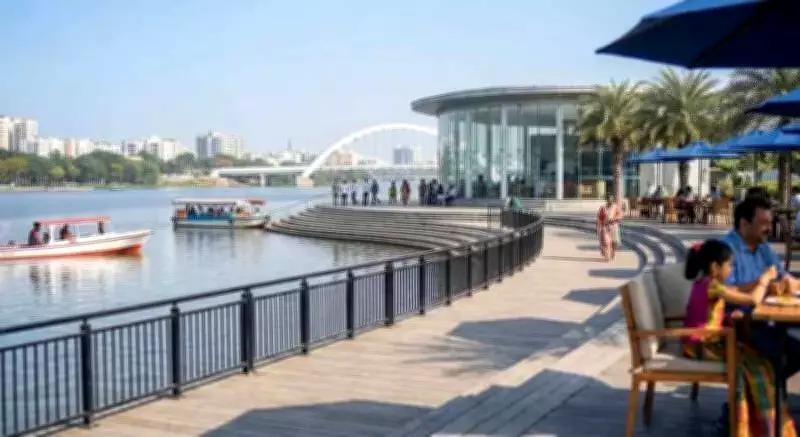
The Telangana government is poised to launch the first phase of its ambitious Musi River rejuvenation project in the first week of April. Official sources confirm that this initial stage will target two specific stretches: from Osman Sagar to Bapu Ghat, covering 11 kilometers, and from Himayat Sagar to Bapu Ghat, spanning 9 kilometers.
Gandhi Sarovar: A World-Class Experiential Centre
As part of Phase I, approximately 200 acres near Bapu Ghat will be transformed into Gandhi Sarovar, a world-class experiential centre dedicated to promoting the philosophy of Mahatma Gandhi. The government had originally planned to commence work in February, coinciding with the month when Gandhi's ashes were immersed at Bapu Ghat in 1948, but preparatory arrangements delayed the timeline. Now, the state government intends to invite Union Defence Minister Rajnath Singh to lay the foundation stone for the Gandhi Sarovar works.
The Musi Riverfront Development Corporation Limited (MRDCL) has finalized the detailed project report and supporting studies, including comprehensive hydrological assessments, to kickstart the initiative. The Asian Development Bank (ADB) has granted in-principle approval for funding, which will be disbursed in phases. MRDCL officials highlight that the project will feature a 123-foot statue of Mahatma Gandhi, set to become the tallest Gandhi statue in India, surpassing the current 72-foot statue in Bihar. Additional plans include a museum of national significance focusing on Gandhi's life and philosophy, along with a knowledge hub aimed at advancing Gandhian ideals.

Infrastructure and Environmental Enhancements
Beyond the Gandhi Sarovar development, Phase I will encompass a range of critical works to revitalize the Musi River. These efforts include river cleaning, removal of vegetation and debris, riverbed profiling, construction of flood-mitigation walls, and slope stabilization. Infrastructure improvements will involve building roads along the riverbanks—a four-lane road on one side and a two-lane road on the other. Furthermore, the project will install trunk sewer lines, stormwater drains, water-retention structures, weirs, and barrages at strategic locations to enhance water management and prevent pollution.
Other facilities planned for Gandhi Sarovar comprise a handloom promotion centre, exhibition spaces showcasing traditional handloom and locally made products, a meditation village for learning diverse meditative practices, and public recreation areas and ghats for visitors. The Gandhi Sarovar project requires about 300 acres of land, with 98 acres belonging to the defence ministry, around 40 acres as private patta land, and the remainder as government land. Within the private land, authorities have identified approximately 1,400 structures that may be affected.
Hydrological Studies and Zoning Strategy
MRDCL has conducted an extensive 100-year hydrological study of Musi River floods and inflows, revealing the highest flood discharge recorded at 1.62 lakh cusecs. Based on this data, a 50-meter buffer zone for the river has been established, with sectioning implemented to manage flood risks effectively. For the overall Musi rejuvenation project, the government has divided the 55-kilometer river stretch into five zones. The Osman Sagar–Bapu Ghat and Himayat Sagar–Bapu Ghat stretches fall under Zone 1, where Phase I work will commence.
Zones 2, 3, and 4 cover the densely populated area from Bapu Ghat to Nagole, while Zone 5 extends from Nagole to Gaurelli near the Outer Ring Road (ORR). To address water quality concerns, the government has proposed 62 sewage treatment plants (STPs) along the 55-kilometer stretch, with some already constructed during the previous BRS government. Officials note that treated water, processed up to tertiary level, will be reused for landscaping, industrial purposes, and other applications. Additionally, the government has allocated about 2.5 tmcft of Godavari water to be diverted into the Musi River to help maintain adequate water levels.
This comprehensive initiative aims to not only rejuvenate the Musi River but also create a sustainable and culturally significant landmark in Telangana, fostering environmental health and promoting Gandhian values for future generations.