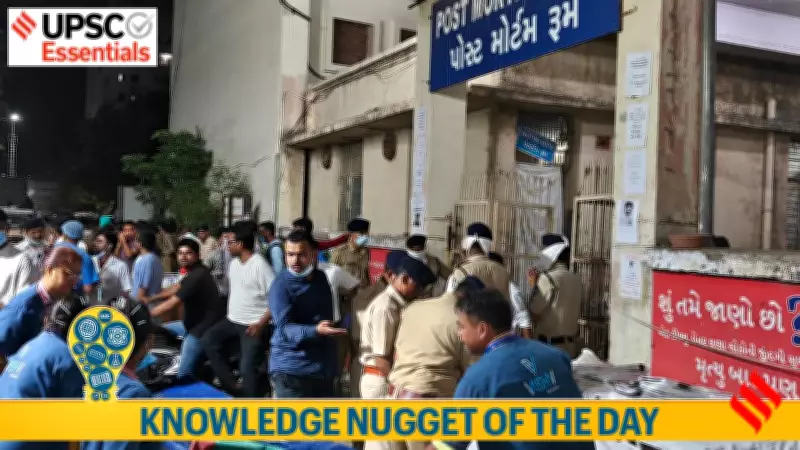
NDMA Unveils Landmark SOP for Disaster Victim Identification in India
In a significant move to enhance disaster management capabilities, the National Disaster Management Authority (NDMA) has released the country's first-ever Standard Operating Procedure (SOP) for Disaster Victim Identification (DVI). This comprehensive document, titled 'National Disaster Management Guidelines on Comprehensive Disaster Victim Identification and Management,' was unveiled on Republic Day by Union Minister of State for Home Bandi Sanjay Kumar in Delhi.
The release marks a pivotal step in bridging critical gaps in handling mass fatality incidents, whether natural or man-made. It comes exactly 25 years after the devastating Gujarat earthquake of 2001, a tragedy that underscored the urgent need for robust victim identification protocols.
Key Recommendations and Innovations
The expansive guidelines detail the roles of all stakeholders in disaster aftermaths, addressing longstanding issues such as manpower shortages, training deficiencies, logistical challenges, and coordination problems at disaster sites. One of the most notable recommendations is the creation of a National Dental Data Registry, which will utilize teeth and jaws for victim identification, leveraging dental records as a reliable forensic tool.

Additionally, the SOP introduces the use of forensic archaeology to aid in identifying bodies months or even years after a disaster, particularly in cases where remains are fragmented or displaced. The guidelines emphasize that DVI is not merely a technical process but a humanitarian imperative, essential for dignified identification, legal clarity, and administrative efficiency.
Four-Stage DVI Process and Leadership
The SOP outlines a structured four-stage DVI process: Scene, Post-Mortem (PM), Ante-Mortem (AM), and Reconciliation. It mandates the clear designation of a DVI Leader, who may be a senior officer from the Health Department or other competent authorities, such as a Chief Medical Officer. This leader is tasked with overseeing the entire identification process, ensuring integration within incident command systems and fostering inter-agency coordination.
The guidelines recognize that DVI extends beyond identification alone, highlighting the importance of dignified return of remains, accurate death certification, transparent communication with families, and institutional learning to restore trust and resilience in affected communities.
Context and Recent Tragedies
The NDMA's move follows five major tragedies in the past year, including the Air India crash in Ahmedabad, a chemical factory explosion in Telangana, the Gambhira bridge collapse in Gujarat, flash floods in Uttarakhand, and a car bomb blast in Delhi. These incidents have highlighted the urgent need for standardized victim identification protocols to manage mass fatalities effectively.
About NDMA and Legislative Framework
The National Disaster Management Authority, established under the Disaster Management Act of 2005, is India's apex body for disaster management, headed by the Prime Minister. The recent SOP is issued under the mandate of this Act, which was amended in 2024 to strengthen disaster response mechanisms.
The Disaster Management (Amendment) Act, 2024 introduces several key changes, including the establishment of Urban Disaster Management Authorities for metropolitan cities, the empowerment of state governments to constitute State Disaster Response Forces (SDRFs), and the mandatory creation of State Disaster Relief Funds (SDRFs) across all states. These amendments aim to enhance local preparedness and response capabilities, particularly in urban areas prone to disasters like flooding.
Relevance for UPSC Aspirants
This development holds significant relevance for UPSC examinations, as disaster management is a critical topic in both prelims and mains. Understanding the new SOP, along with the amended Disaster Management Act, can provide aspirants with insights into contemporary governance and public policy challenges. The guidelines underscore India's evolving approach to disaster resilience, emphasizing prevention, mitigation, and preparedness through collaborative efforts across government agencies, NGOs, and public participation.

In summary, the NDMA's SOP on Disaster Victim Identification represents a landmark step in India's disaster management framework, addressing humanitarian, legal, and administrative needs in mass fatality incidents while offering valuable study material for competitive exams.