

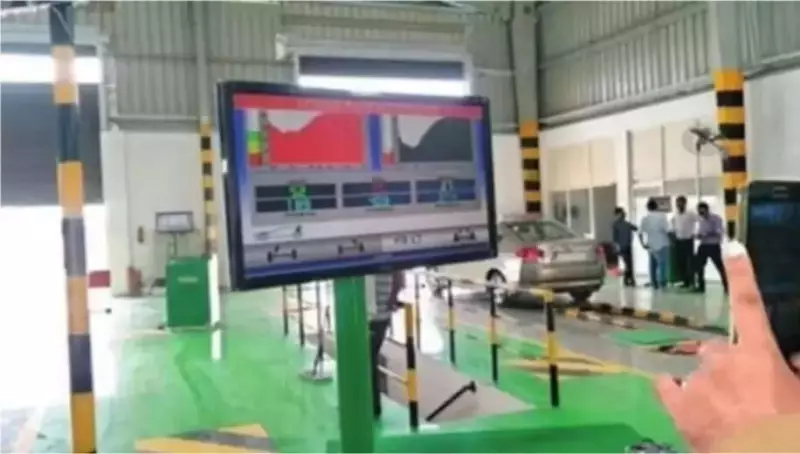
In a significant move to enhance road safety and curb pollution, the Indian government is set to overhaul the fitness testing regime for private vehicles. The Ministry of Road Transport and Highways has proposed new rules that will make it mandatory for all private cars and motorcycles to undergo fitness and pollution checks at Automated Test Stations (ATS), similar to the process for commercial vehicles.
Key Changes in the Fitness Testing Process
The draft notification for amending the Central Motor Vehicles Rules introduces several stringent measures. The primary change is that private vehicles will now need to physically visit an ATS for their fitness tests when renewing registration after 15 years, and subsequently every five years. Currently, there are over 160 such automated stations operational across the country.
To eliminate malpractices where owners obtained certificates without presenting the vehicle, the ministry has proposed a tech-based verification step. The ATS or inspecting officer must upload a minimum 10-second geotagged video of the vehicle during the test. This video must capture the vehicle from the front, rear, and both sides, ensuring clear visibility of the registration plate, chassis number, engine number, and key features.

Stricter Timeline to Curb Endless Re-tests
The proposed norms also aim to close a loophole that allowed vehicle owners to indefinitely extend the testing period. Under the new rules, if a vehicle fails its initial fitness test, the owner will have a maximum of 180 days from the date it was declared 'unfit' to get it certified as 'fit'.
Failure to do so will result in the vehicle being categorized as an 'End of Life Vehicle (ELV)' and flagged as such in the national Vahan database. Officials stated that earlier, owners could simply pay fees just before the 180-day expiry to get an extension, a practice that will no longer be permitted.
Driven by Safety and Pollution Concerns
This regulatory push is driven by twin objectives: improving road safety by ensuring only fit vehicles ply on roads and addressing the growing national concern over vehicular air pollution. The automated testing system is designed to bring objectivity and transparency to the process, reducing human discretion and potential corruption.
An official emphasized that safeguards are being put in place to ensure ATS centers do not provide incorrect test results. The integration of geotagged video evidence is a critical step towards creating an auditable trail for every fitness certificate issued, making the system more robust and trustworthy.






