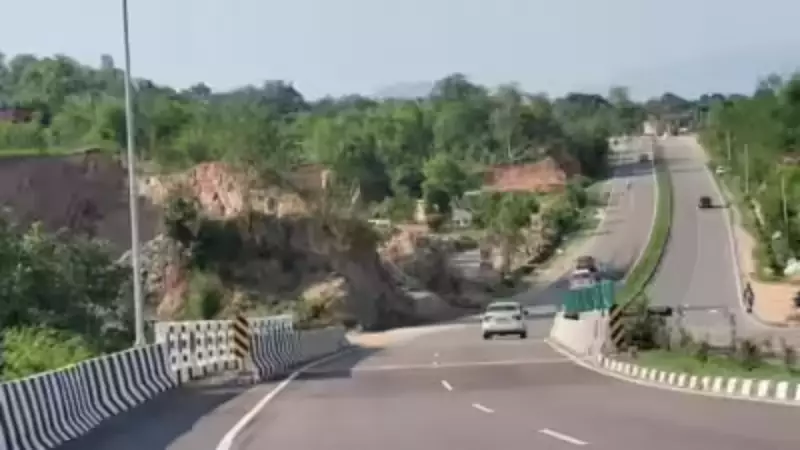
NHAI Rejects GMDA's Stormwater Drain Proposal for NH8 Citing Serious Design Flaws
The National Highways Authority of India has formally rejected a proposal from the Gurugram Metropolitan Development Authority to construct a stormwater drain and culvert crossing on National Highway 8. The rejection, which occurred earlier this month, has put the entire drainage project on hold until revised designs and cost estimates are submitted for fresh approval.
Traffic Disruption and Safety Concerns Lead to Rejection
One of the primary reasons for NHAI's rejection was GMDA's proposed method to build the culvert across the busy NH8 highway. The plan involved laying three piped culverts across the highway, which would require digging up a portion of this critical transportation corridor. An NHAI official explained that this approach was unacceptable because it could severely disrupt traffic flow, increase accident risks, and create prolonged traffic jams on one of the region's most important roadways.
According to officials familiar with the matter, the proposal failed to meet mandatory road and safety guidelines established by the Ministry of Road Transport and Highways and the Indian Roads Congress. Independent experts reviewing the proposal found that important technical details were either missing or unclear in the drawings submitted by GMDA.

Technical Deficiencies in the Proposed Design
The rejected plan had several significant technical shortcomings:
- The drawings did not clearly specify how much water the proposed RCC box-type drain could safely carry
- Critical dimensions including the depth and height of the structure were inadequately documented
- No clear maintenance plan for the future operation of the drainage system was provided
NHAI officials also raised concerns about parts of the proposed drain being positioned too close to the road, creating potential safety hazards for both vehicles and pedestrians. In some sections, the drain was planned to remain open without proper covers or railings, further increasing accident risks.
Alternative Solution Proposed by NHAI
Instead of constructing a new crossing, NHAI's technical experts have suggested redirecting rainwater into an already existing culvert on NH8, which could then discharge into the Badshapur drain. This alternative approach would eliminate the need to dig up the highway and significantly reduce inconvenience to daily commuters.
"While we are ready to construct the culvert, its design needs to be provided by GMDA to ensure that the stormwater is properly carried from the culvert to the drain," explained an NHAI official. "Determining the required levels for proper flow can be assessed by GMDA based on their local requirements."
GMDA's Response and Ongoing Waterlogging Issues
A GMDA official acknowledged the situation, stating: "We shared our proposed plan with NHAI, which has some observations. The construction of the culvert falls under NHAI's scope. We are proceeding with the construction of the stormwater drain, while NHAI can redesign the culvert according to their assessment and requirements."
The original proposal was intended to carry rainwater from the Delhi-Gurugram Expressway to the Badshapur drain through the service road near Narsinghpur and across NH8. GMDA had planned this as a permanent drainage solution to address chronic waterlogging problems in the Narsinghpur area.
However, officials acknowledge that the waterlogging issue cannot be fully resolved without a properly designed culvert to carry stormwater from the Delhi-Jaipur carriageway, where flooding tends to be more severe during monsoon seasons.
The project's suspension highlights the ongoing challenges in coordinating infrastructure development between different government agencies, particularly when it involves critical national highways that experience heavy traffic volumes daily.