Noida Authority Overhauls Governance Structure After Tragic Incident
In a significant administrative reform, the Noida Authority has announced the integration of its separate public health and traffic wings into zonal work circles. This restructuring aims to address long-standing accountability gaps and prevent departments from shifting responsibility, following the tragic death of a 27-year-old techie in a flooded ditch.
Catalyst for Change: The Sector 150 Tragedy
The decision comes in the wake of public outrage over the drowning of Yuvraj Mehta, whose car plunged into an exposed, flooded trench in Sector 150. The incident highlighted severe lapses in barricading, excavation safety, and monitoring protocols. Residents reported that the trench lacked warning signs, lighting, or protective covers, prompting the Authority to launch an internal review into supervision and compliance failures.
New Organizational Framework
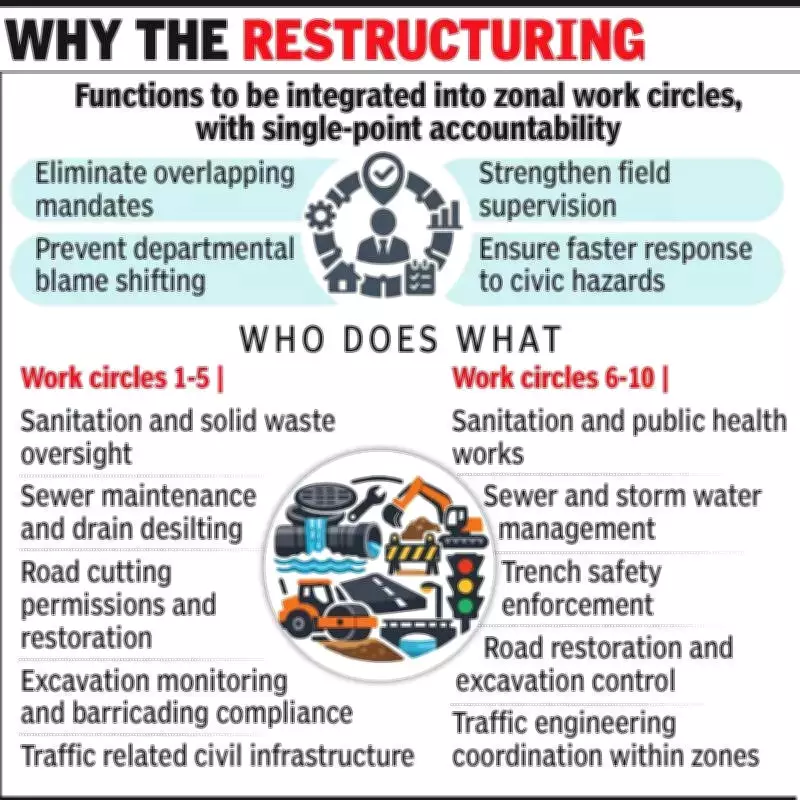
Under the revised arrangement, the standalone Public Health Department and Noida Traffic Cell will be dissolved. Their functions will now be managed by individual work circles, grouped under two general managers (Civil):

- GM SP Singh will oversee work circles 1-5, handling sanitation, sewer maintenance, drain cleaning, excavation monitoring, road restoration, and traffic-related civil work.
- GM AK Arora will supervise work circles 6-10 with similar consolidated authority in his zones.
Senior managers and project staff will report directly within this hierarchy, establishing single-point accountability at the GM level to streamline decision-making and response times.
Background of the Disbanded Units
The Noida Traffic Cell, created in 2012, operated independently from the civil department and was responsible for:
- Traffic planning and junction design
- Signage and signal coordination
- Liaison with traffic police
Similarly, the Public Health Department managed sanitation, solid waste oversight, sewer systems, and waterlogging mitigation. Both were led by GM-level officers, but over time, their bifurcated structure led to overlapping mandates and bureaucratic delays.
Addressing Accountability Gaps
Officials explained that the previous system often resulted in files being shuffled between departments for issues like dug-up roads or incomplete trench restoration, causing delays and blurred accountability, especially in emergencies. By integrating functions into the work circle framework, the Authority aims to eliminate ambiguity. Each GM will now be directly accountable for:
- Road-cutting permissions and trench safety compliance
- Drain desilting and sewer upkeep
- Traffic-related infrastructure within their assigned zones
Enhanced Safety Measures for the Future
To prevent recurrences of incidents like the Sector 150 case, senior officials have committed to stricter monitoring protocols, including:
- Mandatory barricading at excavation sites
- Enhanced inspection schedules and periodic safety audits
- Improved field-level supervision
The overarching goal is to streamline governance, strengthen oversight, and ensure quicker responses to civic hazards across Noida, fostering a safer urban environment for all residents.