

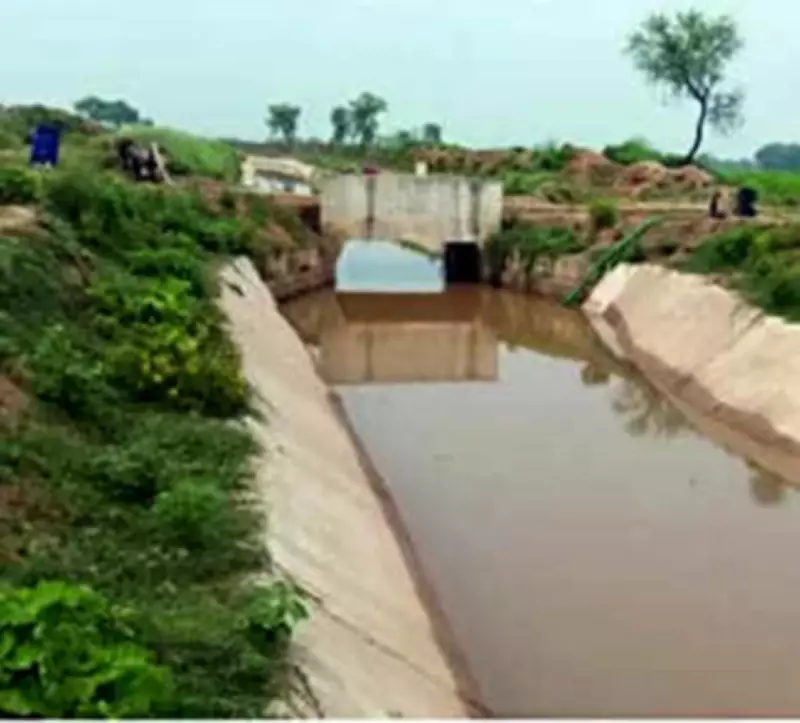
North Koel Irrigation Project Faces Critical Deadline Amid Land Acquisition Delays
With less than two weeks remaining until the March 31 deadline, officials in Aurangabad are in a frantic race against time to complete the long-awaited North Koel irrigation project. However, despite intense monitoring by both the Union and state governments, the project appears unlikely to meet its scheduled completion date due to unresolved land acquisition issues.
Decades of Delays and Mounting Costs
Originally launched in 1972, the North Koel irrigation project has already been delayed by more than four decades. The project's cost has skyrocketed from an initial estimate of Rs 30 crore to a staggering Rs 2,430 crore today—a nearly hundredfold increase that reflects both inflation and prolonged implementation challenges.
A few days ago, Chief Secretary Pratyaya Amrit conducted a video conference review of the project's progress, directing Aurangabad District Magistrate Abhilasha Sharma and other officials to accelerate construction efforts. Despite this high-level intervention, significant obstacles remain.

Land Acquisition Shortfalls and Infrastructure Hurdles
According to sources familiar with the project, only about 36 hectares of land have been acquired against a requirement of 41 hectares, leaving more than 10% of the necessary land still pending. This shortfall represents a critical bottleneck that threatens to derail the entire timeline.
Compounding the land acquisition problem are unresolved infrastructure issues, including the relocation of electric poles and shifting of transformers. These technical challenges add further complexity to an already strained implementation schedule.
When questioned about the likelihood of meeting the March 31 deadline, District Magistrate Abhilasha Sharma remained non-committal, stating she would need to seek an update from the water resources department. However, she expressed confidence that the work would be completed before the onset of the monsoon season, tentatively scheduled for June 15.
Environmental History and Revival
The North Koel project has a complicated environmental history. Work was halted in 1993 due to concerns that the proposed dam height posed a threat to the Palamu Tiger Reserve in neighboring Palamu district, which was then part of undivided Bihar. The project remained dormant for decades until its revival in 2017, when the dam height was reduced to address environmental concerns.
The project's main water source is located in Jharkhand, adding an inter-state coordination dimension to the implementation challenges. Sources indicate that the Prime Minister's Office is closely monitoring the progress of this significant agricultural infrastructure scheme.
Agricultural Impact and Historical Context
Once completed, the North Koel irrigation project is expected to provide assured irrigation to more than 95,000 hectares of farmland in some of the most drought-prone areas of Aurangabad district. Farmers are anticipated to benefit from the project during the coming Kharif season, potentially transforming agricultural productivity in the region.
It's worth noting that Aurangabad was part of the erstwhile Gaya district when the project began in 1972, highlighting how administrative changes have intersected with this long-delayed development initiative over the decades.
The current deadline pressure represents just the latest chapter in a project that has faced environmental challenges, bureaucratic hurdles, and implementation delays spanning generations. As officials work to overcome the final obstacles, the agricultural community watches with anticipation for what could finally become a reality after more than fifty years of waiting.






