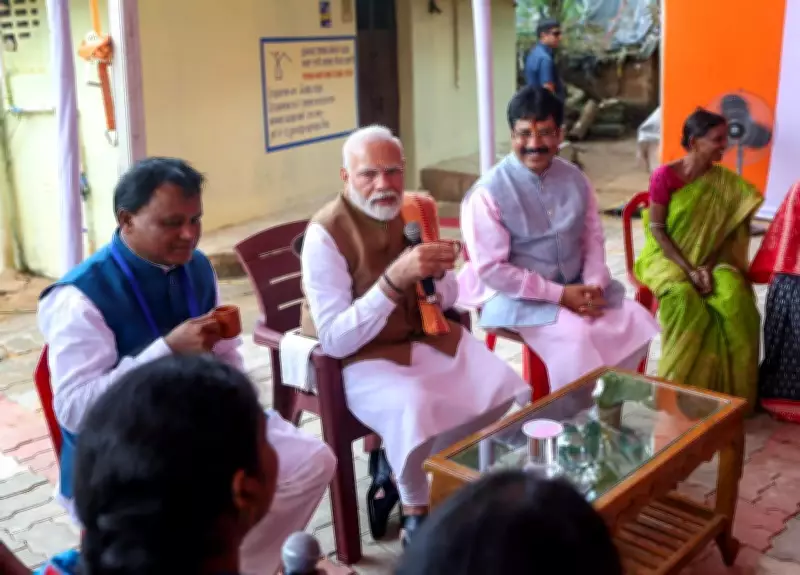
The Odisha government, led by Chief Minister Mohan Charan Majhi, has empanelled seven premier institutions to conduct rapid and survey-based assessments of its schemes as it approaches its second anniversary in office. This initiative aims to generate real-time feedback, identify implementation gaps, and facilitate swift policy adjustments.
Empanelled Institutions
The empanelled institutions include the Indian Institute of Technology (IIT) Bhubaneswar, the National Institute of Science Education and Research (NISER), the National Institute of Technology (NIT) Rourkela, Utkal University, the Odisha University of Agriculture and Technology, Nabard, and XIM University, Bhubaneswar. This was announced through a finance department office memorandum issued on Thursday.
Purpose and Benefits
A senior government officer stated that these assessments will provide quick, evidence-based inputs from the field, helping to identify operational bottlenecks, delivery gaps, and beneficiary-level challenges without delay. “This will allow the government to take immediate corrective steps, recalibrate strategies mid-course, and improve efficiency while schemes are still underway,” the officer explained.

Assessment Process and Timeline
The entire assessment process is designed to be completed within four months, following a phased schedule that includes design, fieldwork, analysis, and reporting. The empanelment will remain valid for an initial period of three years, with all datasets and reports retained as government property. The empanelled institutions will be responsible for end-to-end execution, including preparing questionnaires and survey tools in consultation with departments, conducting field surveys among beneficiaries, and collecting ground-level data for analysis. Different institutions will survey different schemes.
Methodology and Reporting
The agencies will apply both qualitative and quantitative methods to assess scheme performance, identify implementation gaps, and gauge beneficiary response. They will submit inception reports, undertake fieldwork, clean and analyze datasets, and deliver draft and final reports along with stakeholder presentations. The teams deployed will include project managers, domain experts, and data analysts, with a focus on technical accuracy and adherence to ethical standards.
Evaluation Focus
Existing schemes will be evaluated for design, monitoring systems, and implementation gaps, while newly launched programmes will be assessed for early outcomes and on-the-ground response. The objective is to enable concurrent evaluation rather than waiting for full-fledged third-party studies, which often take longer to complete.
Actionable Insights
Officials emphasized that the rapid assessments are aimed at providing actionable insights for immediate intervention, mid-course corrections, and future policy planning. Departments will identify schemes based on strategic importance or emerging concerns and coordinate with the finance department for approval and selection of agencies.
Implementation and Costs
The administrative departments concerned will act as nodal units for execution, appointing officers to oversee the process, facilitating field coordination, and ensuring timely availability of data and documents. They will also be responsible for funding studies and submitting action taken reports on the recommendations. The cost per study ranges from approximately Rs 10.6 lakh for surveys covering up to 300 households to about Rs 24.8 lakh for those covering up to 1,500 households.