

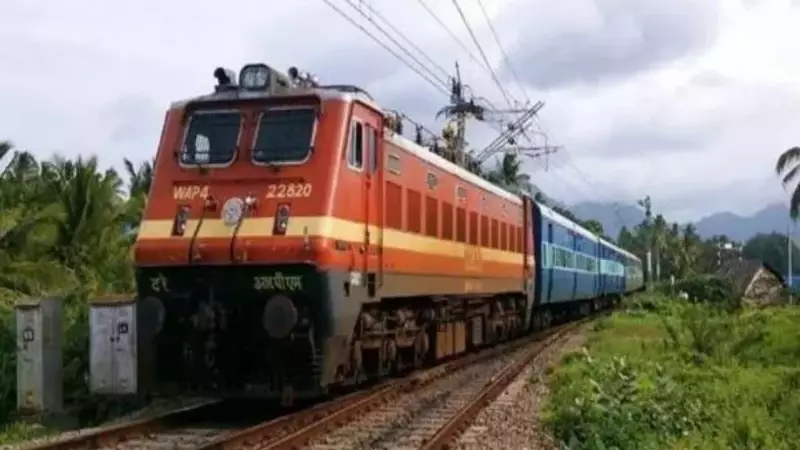
Indian Railways is now aiming to make its indigenous automatic train protection system, Kavach, operational on the crucial Delhi-Mumbai and Delhi-Howrah corridors sometime in 2026. This comes after the national transporter missed its second extended deadline of December 2025 for the project. Officials express confidence in achieving the new target, citing steady progress and an aggressive implementation approach.
What is Kavach and Why the Delay?
Kavach is a homegrown, technology-intensive Automatic Train Protection (ATP) system designed to enhance safety. It automatically applies brakes if a loco pilot fails to adhere to specified speed limits, thereby preventing collisions and overspeed incidents. The journey to deployment has seen revised timelines. Initially, the Railway Ministry, on August 7, 2024, stated work would be completed by March 2025. This was later extended to December 2025, as announced in a budget document on February 1, 2025.
Officials acknowledge the missed deadlines but highlight substantial groundwork. They report that 25 per cent of the work on these high-density routes has already been commissioned and is in a ready-to-use state. For the remaining 75 per cent, major components have been installed, paving the way for final integration and testing. "We are doing our level best to operationalise Kavach on the Mumbai-Delhi and Delhi-Kolkata route, hoping that it will be achieved in 2026," officials stated.

Detailed Progress Report and Minister's Update
Railway Minister Ashwini Vaishnaw provided a comprehensive update in the Lok Sabha on December 17, responding to a query from Congress MP Mallu Ravi. He confirmed that after extensive trials, Kavach Version 4.0 has been successfully commissioned on 738 Route km. This includes the Palwal-Mathura-Nagda section (633 Rkm) on the Delhi-Mumbai route and the Howrah-Bardhaman section (105 Rkm) on the Delhi-Howrah route.
The minister detailed the installation of critical infrastructure across the network:
- Optical Fibre Cable laid on 7,129 km.
- 800 telecom towers installed.
- Station Kavach units operational at 860 stations.
- Track-side equipment deployed over 5,672 route km.
- Loco Kavach systems fitted on 4,154 locomotives.
Vaishnaw emphasized that Kavach 4.0, launched on July 16, 2024, incorporates learnings from earlier versions and covers features needed for India's diverse rail network. He called it a "significant milestone in safety for Indian Railways." Furthermore, bids have been invited to equip an additional 9,069 locomotives with the new system.
The Road Ahead and Scaling Challenges
The broader plan involves implementing Kavach on 15,512 route km, covering the Golden Quadrilateral, Golden Diagonal, High-Density Network, and other identified sections. However, scaling up remains a key challenge. Officials noted that initially, only three companies were approved for installation. That number has now crossed five, and the hope is to have over 20 approved vendors by 2026.
"Indian Railways needs more than 50 original equipment manufacturers to expedite the installation process," officials explained, highlighting the scale of the task given the 78,000 km long broad-gauge network which continues to expand. Experts stress the urgency of such technical aids, pointing to the significant increase in train operations over the years and the need to minimize risks from human error.
The system's development traces back to its first field trials on passenger trains in February 2016. It was formally adopted as the National ATP system in July 2020. With the current push, Indian Railways is inching closer to a nationwide safety net, with the Delhi-Mumbai and Delhi-Howrah corridors being the immediate priority for 2026.






