

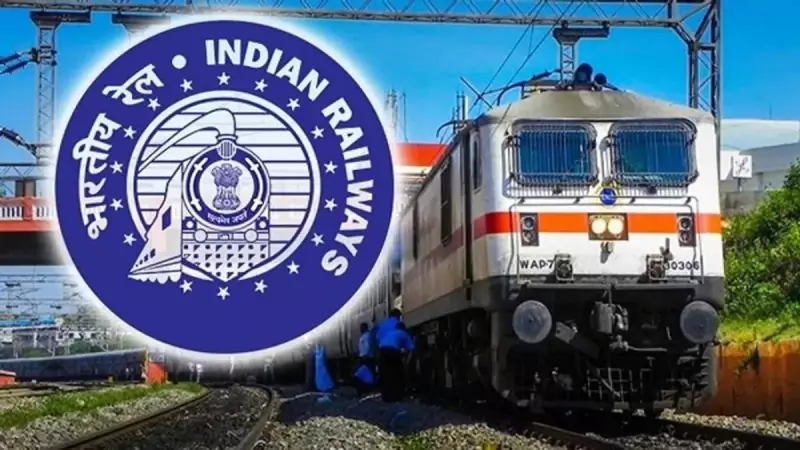
In a transformative move set to redefine urban and inter-city travel, Indian Railways has charted an ambitious five-year blueprint aimed at dramatically enhancing its network capacity. The cornerstone of this strategy involves a massive push for track tripling and quadrupling on heavily congested routes connecting the country's major metropolitan hubs. The plan, with a target completion window by 2030, is designed to effectively double the number of trains that can operate on these critical corridors.
Unclogging the Arteries: The Core Infrastructure Push
The national transporter is shifting its focus from traditional double-line expansion to more intensive infrastructure development. The identified solution lies in constructing third and fourth railway lines on sections that are perennially saturated with traffic. This approach directly tackles the root cause of congestion and capacity constraints, allowing for a significant increase in train frequency and smoother operations.
Key routes that have been prioritized for this mega upgrade include some of the busiest corridors in the nation. The plan earmarks substantial development for the routes connecting Delhi to Howrah and Delhi to Mumbai. Furthermore, critical sections in the Southern Peninsula, such as the Chennai-Kazipet and Chennai-Bengaluru lines, are also slated for major augmentation. These corridors are vital lifelines for both passenger and freight movement, and their decongestion is expected to have a ripple effect on the entire network's efficiency.

Strategic Sections and the Impact on Major Hubs
The detailed plan zeroes in on specific, high-stress sections that act as bottlenecks. A prime example is the Vijayawada-Gudur-Renigunta section, a crucial link on the Chennai-Kolkata corridor. By adding more lines here, Railways intends to unlock seamless connectivity across the eastern coast. Similarly, the Itarsi-Nagpur section is a key junction that will see expansion to improve north-south and east-west connectivity.
This targeted infrastructure overhaul is expected to bring transformative benefits to major urban centers. Cities like Mumbai, Delhi, Chennai, and Kolkata, which serve as the primary origin and destination for a colossal volume of daily commuters and long-distance travelers, will experience a direct impact. The increased capacity will not only allow for more frequent suburban and passenger trains but also free up paths for faster freight movement, aligning with the national goals of logistics improvement and economic growth.
A Future-Proof Network: Outcomes and Long-Term Vision
The implications of this five-year capacity doubling mission are profound. The immediate and most visible outcome will be a potential reduction in travel time and waiting lists for passengers, as more trains can be scheduled. For the economy, a more fluid network translates to lower logistics costs and faster turnaround times for goods transport, boosting competitiveness.
This initiative represents a strategic pivot from reactive capacity enhancement to proactive, future-proof planning. By addressing the infrastructure limitations at their core through tripling and quadrupling, Indian Railways is laying down the groundwork for the next few decades of growth. It underscores a commitment to not just meet current demand but to anticipate and facilitate future mobility needs, ensuring that the railways remain the backbone of India's transportation ecosystem. The successful execution of this plan by 2030 will mark a significant leap towards a more robust, efficient, and high-capacity national railway system.






