In a significant development with major implications for environmental conservation, the Supreme Court of India has put on hold its recent order that accepted a contentious 100-metre height-based definition for the Aravalli hills. This decision, alongside major defence procurement approvals and international health alerts concerning an Indian rabies vaccine, forms the crux of crucial current affairs for UPSC aspirants on December 30, 2025.
Supreme Court Pauses Aravalli Definition, Seeks Expert Review
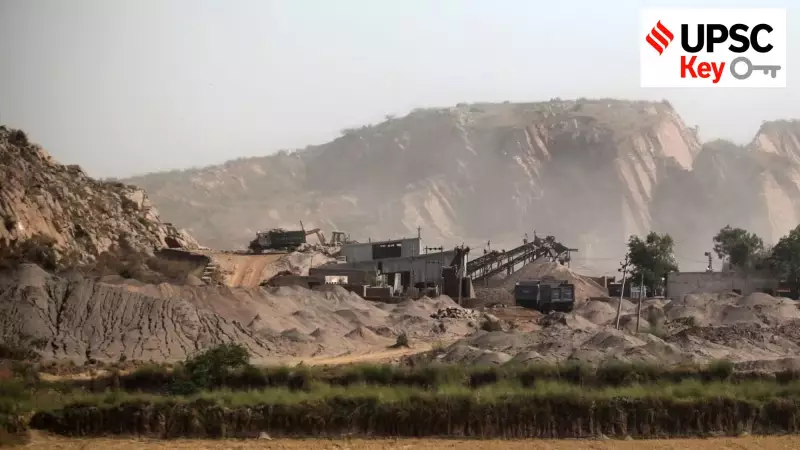
A three-judge bench led by Chief Justice of India Surya Kant issued a stay on its own November 20 order. The earlier ruling had accepted the Centre's proposal to define the Aravalli hills and ranges based on a minimum height of 100 metres. Citing public dissent and perceived ambiguity, the court has now decided to constitute a High-Powered Expert Committee (HPEC) comprising domain specialists to resolve critical issues.
The court's move comes after concerns were raised that the 100-metre definition would exclude a vast majority of the Aravalli hills from legal protection. An internal analysis by the Forest Survey of India (FSI) indicated that only 1,048 out of 12,081 hills measuring 20 metres or higher would qualify under this criterion. The court has asked the new committee to examine the ecological impact of excluding lower hills and areas where hills are more than 500 metres apart.
The Aravalli range, over a billion years old, acts as a crucial ecological shield for northwest India, preventing desertification, regulating climate, and supporting water resources. The court has also continued the moratorium on renewing mining leases in areas defined under the FSI's older 2010 formula, which used a 3-degree slope for identification.
Major Defence Procurements Get Green Light
In a separate development vital for national security, the Defence Acquisition Council (DAC), chaired by Minister Rajnath Singh, granted Acceptance of Necessity (AoN) for capital acquisitions worth approximately ₹79,000 crore. The approvals span all three armed services and emphasize indigenization.
Key clearances for the Army include a Loiter Munition System for precision strikes and Low Level Light Weight Radars to detect drones. For the Indian Air Force, the DAC cleared the procurement of the indigenous Astra Mk-II Beyond Visual Range Air-to-Air Missiles, with a range exceeding 200 km, to be integrated with Sukhoi-30 and Tejas fighter jets. The Navy received approval to lease a High Altitude Long Range Remotely Piloted Aircraft System (RPAS).
Global Alerts Over Indian Rabies Vaccine
Public health agencies in Australia, the UK, and the US have issued advisories concerning the Indian rabies vaccine Abhayrab. The alerts urge citizens who may have received rabies shots in India since November 2023 to consult doctors about potential replacement doses due to concerns about counterfeit batches in circulation.
The manufacturer, Indian Immunologicals, stated it identified one specific counterfeit batch in January 2025 and alerted authorities. Rabies is nearly 100% fatal after symptoms appear, making effective post-exposure prophylaxis critical. India accounts for an estimated 36% of global rabies deaths, underscoring the seriousness of vaccine integrity.
Kashmir's Pivotal Role in Buddhist History
Recent archaeological excavations at Zehanpora in Baramulla, Kashmir, have uncovered Kushan-period Buddhist stupas and artefacts, reigniting scholarly focus on the region's central role in the spread of Buddhism. Historically, Kashmir served as a major intellectual and spiritual hub, or Sharada Pitha.
During the Kushan era under Emperor Kanishka, tradition holds that the Fourth Buddhist Council was convened in Kashmir. The region was a crucial launchpad for Mahayana Buddhism's spread into Central Asia and beyond, home to philosophers like Nagarjuna. This legacy is preserved in ancient texts like the Gilgit Manuscripts.
Banking Sector Health and Clean Energy Push
The Reserve Bank of India reported that the gross non-performing asset (GNPA) ratio of banks improved to a multi-decade low of 2.1% in September 2025. This improvement was aided by better recoveries and upgrades of stressed loans.
In the renewable energy sector, analysis highlights India's growing domestic solar module manufacturing capacity, which nearly doubled in 2024. However, challenges remain, including dependence on imports for upstream components like polysilicon and wafers, and grid constraints that lead to renewable energy curtailment. The success of initiatives like the National Green Hydrogen Mission will depend on reducing production costs and building supporting infrastructure.
These interconnected developments across environment, defence, health, history, and economy provide a comprehensive snapshot of the dynamic issues relevant for the UPSC Civil Services Examination, testing candidates on their understanding of governance, policy, and India's strategic interests.