

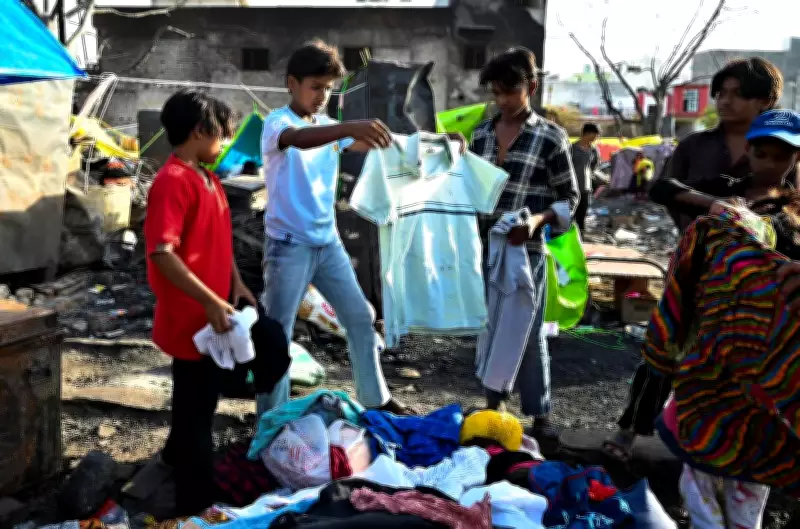
Urban Planners Demand Fundamental Rethink After Lucknow Fire Tragedy
In the wake of the catastrophic fire that ravaged Vikas Nagar, urban planners and architects across India are issuing a clarion call for a complete overhaul in how informal settlements and temporary housing clusters are developed and rehabilitated within Lucknow. The devastating incident has exposed critical vulnerabilities in urban planning approaches, prompting experts to demand sustainable solutions that prioritize resident safety without disrupting essential socio-economic networks.
The Reality of Informal Housing Clusters
Experts point out that shanty clusters frequently emerge organically around major construction projects and labor hubs, as workers require proximity to their employment sites. Ignoring this fundamental urban reality inevitably leads to repeated disasters, according to urban planning specialists. Instead of pursuing eviction or distant relocation strategies that have consistently failed, authorities must embrace in-situ redevelopment as the only viable long-term solution.
"Whenever significant construction activity occurs, clusters of informal housing naturally develop because labor needs to reside close to work sites," explained Dr. Aditi Mitra Ghosh from the Department of Civil Engineering at IIT Kharagpur. "Rather than treating these settlements as temporary problems, we must recognize them as permanent features of our urban landscape that require proper planning and investment."

The Critical Importance of In-Situ Rehabilitation
Dr. Ghosh emphasized that "in-situ rehabilitation" specifically refers to improving living conditions for slum-dwellers without physically relocating them to different areas. This approach preserves crucial livelihood connections that would otherwise be severed by displacement to distant locations. For residents working as domestic helpers, street vendors, drivers, or daily-wage laborers in nearby neighborhoods, maintaining proximity to employment opportunities is essential for economic survival.
Suresh Nagpal, a certified urban planner from the School of Planning and Architecture in Delhi, highlighted the urgent need for implementing low-cost yet fire-resilient housing designs. He recommended replacing highly flammable materials like plastic sheets and cloth with safer alternatives including insulated tin roofing or fiber cement boards, complemented by brick or concrete block walls for enhanced structural integrity.
Design Solutions for Fire Prevention
"Architectural design plays a pivotal role in preventing fire disasters," Nagpal asserted. "Basic urban planning principles, such as maintaining three to six meter-wide firebreak lanes between housing clusters, can dramatically slow flame spread and provide crucial access routes for firefighting vehicles."
Neha Kumari, an independent urban planner from IIT Roorkee, proposed developing innovative "small group housing" models specifically tailored for low-income and migrant populations working in urban areas. These compact, planned clusters would incorporate essential services, regulated layouts, and safer construction materials while maintaining the density necessary for urban efficiency.
Transforming Vulnerable Communities
"If we simply rebuild settlements using the same hazardous methods, we are essentially waiting for the next fire disaster to occur," warned an urban designer involved in the discussions. Piyali Dasgupta from the Centre for Urban Disaster Studies at SPA elaborated further: "By thoughtfully integrating proper planning, enhanced safety measures, and livelihood preservation, we possess the capability to transform these vulnerable clusters into resilient, sustainable communities that can withstand urban challenges."
The consensus among urban experts is clear: the Vikas Nagar tragedy must serve as a catalyst for meaningful change in how Indian cities approach informal settlements. Rather than temporary fixes or displacement strategies, comprehensive in-situ rehabilitation incorporating fire-resilient designs represents the most humane and practical path forward for creating safer urban environments for all residents.






