West Bengal Unveils Draft Policy for Sustainable Wastewater Reuse
The West Bengal state urban development and municipal affairs department has formulated a comprehensive draft policy focused on the safe and sustainable reuse of treated wastewater. This initiative aims to address water scarcity and promote environmental conservation across the state.
Key Provisions of the Draft Policy
The draft policy mandates that all new residential housing units constructed after obtaining environmental clearance must prioritize the reuse of treated wastewater for non-potable purposes to the greatest extent possible. This requirement is designed to integrate water conservation practices into urban development from the outset.
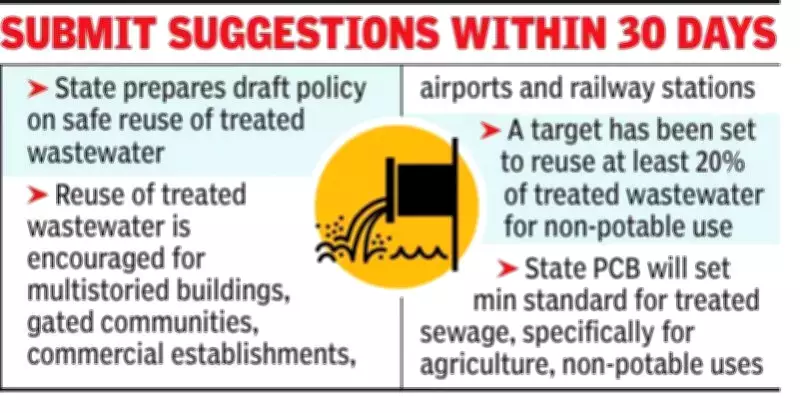
Furthermore, the policy encourages the adoption of treated wastewater reuse in a wide range of settings, including multistoried buildings, gated communities, public buildings, commercial establishments, hotels, airports, and major railway stations. By targeting these high-impact areas, the state aims to significantly reduce freshwater consumption and enhance sustainability.

Implementation and Monitoring Framework
To ensure effective implementation, the draft recommends the creation of a detailed database and a management information system utilizing a Geographic Information System (GIS) platform. This system will facilitate regular assessments of water demand, wastewater generation, and the reuse of treated wastewater across various sectors. Additionally, it will assist in mapping the specific requirements and optimal locations for new treatment plants.
The West Bengal Pollution Control Board (WBPCB) will play a crucial role in monitoring the quality of treated municipal wastewater, with a particular focus on detecting emerging contaminants and heavy metals. This oversight is essential to safeguard public health and environmental standards.
Ambitious Targets and Economic Incentives
The draft policy sets an ambitious target of reusing at least 20% of treated wastewater for non-potable applications by the year 2030. This goal encompasses diverse sectors such as industry, power generation, agriculture, and housing, reflecting a holistic approach to water resource management.
To support this objective, the draft suggests imposing a user charge on the consumption of treated wastewater and exploring opportunities for commercializing its use to generate revenue. These measures are intended to create economic incentives that encourage widespread adoption and ensure the financial viability of wastewater reuse projects.
Stakeholder Engagement and Next Steps
All relevant stakeholders, including experts, institutions, and the general public, are invited to review the draft policy and submit their suggestions within the next 30 days. This collaborative approach aims to incorporate diverse perspectives and refine the policy before its finalization, ensuring it is both practical and effective in addressing West Bengal's water management challenges.