Union Minister Shivraj Singh Chauhan Calls for Enhanced Scientist-Farmer Collaboration in Varanasi
Union Agriculture Minister Shivraj Singh Chauhan made a significant visit to Varanasi on Thursday, where he delivered a compelling message to the scientific community. After offering prayers at the revered Kashi Vishwanath Temple, Chauhan proceeded to the Indian Institute of Vegetable Research (IIVR) located in Shahanshahpur. During his address at the institute, the minister passionately urged scientists to forge closer ties with farmers, emphasizing the critical need to transfer advanced agricultural technologies directly to the fields. This initiative aims to substantially enhance vegetable quality and boost overall productivity across the nation.
Focus on Key Areas: Shelf Life, Exports, and Organic Methods
Chauhan outlined several priority areas for immediate scientific attention. He stressed that researchers should concentrate on developing vegetable varieties with extended shelf life, particularly for tomatoes, to reduce post-harvest losses. Additionally, the minister called for the creation of specialized varieties tailored for processing industries and export-oriented production, which could open new revenue streams for farmers. Promoting organic farming practices was another key highlight, as Chauhan advocated for sustainable agricultural methods that align with global environmental standards.
The minister underscored that a combination of improved seed varieties, quality planting materials, cost-reduction technologies, and direct market linkages can dramatically increase farmers' incomes. He directed the IIVR to accelerate the dissemination of existing technologies, develop new vegetable species specifically for export markets, and establish partnerships with agricultural start-ups and Farmer Producer Organizations (FPOs). Furthermore, Chauhan emphasized the importance of engaging youth in agri-entrepreneurship to infuse fresh energy and innovation into the sector.

Review of Innovations and On-Ground Interactions
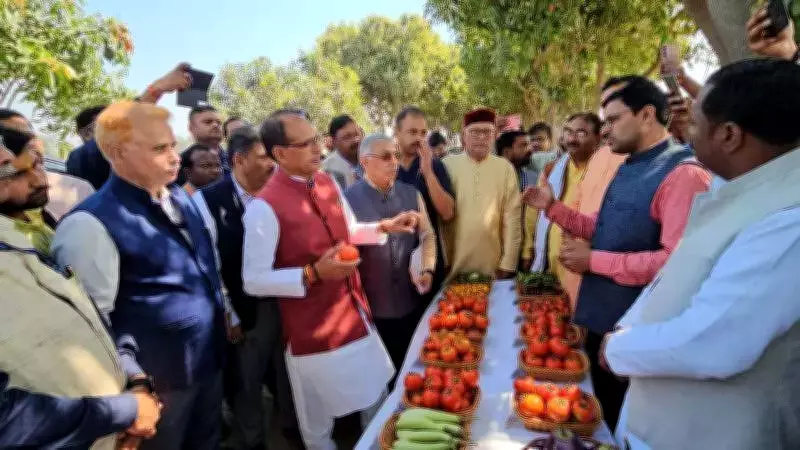
During his visit, Chauhan reviewed several bio-based products developed by the institute, including microbial bio-fertilizers, bio-stimulants, and bio-pesticides, which offer eco-friendly alternatives to chemical inputs. Earlier in the day, he planted red sandalwood saplings on the IIVR campus and conducted an extensive field visit. This hands-on tour included detailed discussions with local farmers regarding critical issues such as seed availability, quality assurance, measures to lower production costs, and the adoption of modern farming technologies.
Scientists at the institute showcased groundbreaking innovations like grafted plants such as Brimato (brinjal-tomato) and Pomato (potato-tomato), which demonstrate the potential for higher yields and resilience. Chauhan pushed for expediting farmer access to these technologies, ensuring that such advancements reach the grassroots level without delay. He also highlighted the pivotal role of high-tech nurseries and the necessity for FPOs to supply quality seedlings and seeds to farmers consistently.
Strategic Planning for Climate Resilience and Future Seasons
Looking ahead, Chauhan emphasized the need for meticulous preparation. He called for the development of region-wise action plans tailored for the upcoming rabi season, ensuring that vegetable production systems are robust and adaptable. With climate change posing significant challenges, the minister stressed the importance of building resilience into farming practices to safeguard yields against unpredictable weather patterns.
To facilitate faster technology transfer, Chauhan advocated for enhanced coordination between Krishi Vigyan Kendras (KVKs) and research institutes like IIVR. This collaborative approach is expected to bridge the gap between laboratory research and field application, making cutting-edge solutions more accessible to farmers. Institute director Rajesh Kumar provided a comprehensive presentation detailing IIVR's achievements and ongoing projects with farmers, showcasing the institute's commitment to advancing vegetable agriculture through science and innovation.