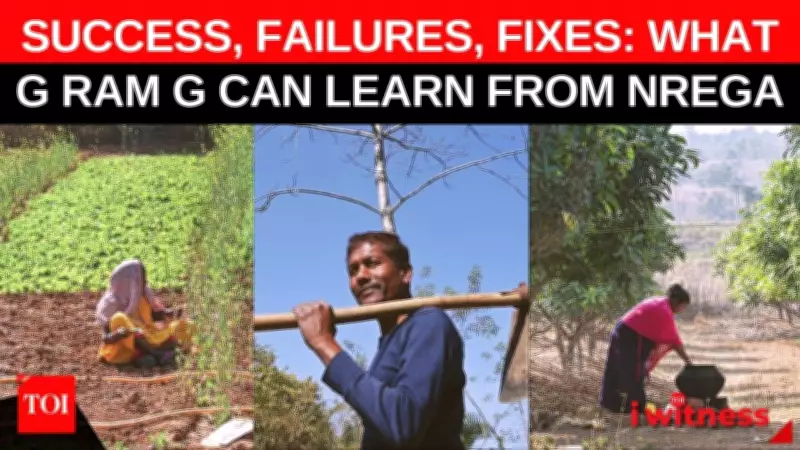
G RAM G vs NREGA: Can India's New Rural Jobs Scheme Learn from Past Mistakes?
India's ambitious G RAM G (Gramin Rozgar Ajeevika Mission Guarantee) scheme represents a bold attempt to modernize rural employment policy, replacing the two-decade-old MGNREGA framework. This new legislation promises more work days—125 instead of 100—while aligning with the Viksit Bharat vision through technology-driven tools like biometric authentication, geo-tagging, and real-time dashboards. However, this modernization comes with significant caveats that could reshape the future of rural welfare in India.
The Shift from Rights-Based to Efficiency-Focused Model
G RAM G signals a fundamental shift from a rights-based welfare program toward a development-oriented, efficiency-focused model. By introducing advanced technological tools, the scheme aims to streamline operations and reduce fraud, potentially addressing some of the digital blunders and scams that plagued earlier initiatives. This approach reflects a broader trend in governance, where data and technology are leveraged to enhance transparency and accountability in public spending.
Yet, this shift raises critical questions about the structural commitment to rural employment. While the promise of additional work days appears progressive, the underlying changes in funding and implementation could dilute the very guarantee that made MGNREGA a success story for India's poorest communities.

The Critical Caveat: Cost-Sharing and Fiscal Contingencies
The most controversial aspect of G RAM G is the move to a 60:40 Centre-state cost-sharing model. This change fundamentally undermines the demand-driven guarantee that was the cornerstone of MGNREGA, effectively making employment contingent on fiscal allocations rather than citizen entitlement. Critics—including economists and grassroots organizations—warn that the guarantee now exists only to the extent the Centre chooses to fund it.
This fiscal restructuring places a disproportionate burden on poorer states, which may struggle to meet their share of the costs. As a result, the scheme's effectiveness could vary widely across regions, potentially exacerbating existing inequalities rather than alleviating them. The risk is that G RAM G may deliver less in terms of structural commitment, despite its promises of more work days.
Learning from NREGA's Successes and Failures
To succeed, G RAM G must learn from both the successes and failures of NREGA. The older scheme's demand-driven approach ensured that employment was available as a right, not a privilege, making it a lifeline during economic downturns and natural disasters. However, NREGA also faced challenges, including implementation gaps, corruption, and inefficiencies that limited its impact.
G RAM G's technology-driven tools offer a chance to address these issues, but they must be balanced with a robust guarantee mechanism. Without this, the scheme risks becoming another digital blunder, where efficiency gains are overshadowed by reduced access for the most vulnerable. The key question is whether G RAM G can hold on to the advantages of NREGA while innovating for the future.
Broader Implications for Rural Development
The introduction of G RAM G reflects a broader rethinking of rural development policy in India. By tying employment to the Viksit Bharat vision, the scheme aims to integrate welfare with long-term economic growth. This could potentially create more sustainable livelihoods and reduce dependency on temporary work.
However, this vision must be grounded in practical realities. If poorer states are unable to fund their share, the scheme's promise may remain unfulfilled, leading to disillusionment and increased poverty. The success of G RAM G will depend not only on technological innovation but also on equitable fiscal policies and strong political will.
In conclusion, G RAM G represents a significant evolution in India's rural employment strategy, but its success hinges on learning from the past. By addressing the flaws of NREGA while preserving its core guarantees, the scheme has the potential to transform rural livelihoods. Yet, without careful implementation and adequate funding, it risks becoming another chapter in the story of scams and digital blunders, rather than a genuine success story for India's rural poor.