Can G-RAM Live Up to the Legacy of NREGA? A Critical Analysis
The National Rural Employment Guarantee Act (NREGA), a landmark initiative launched in 2005, has long been hailed as a cornerstone of India's rural development strategy. It guaranteed 100 days of wage employment per year to rural households, providing a crucial safety net and boosting local economies. Now, the proposed G-RAM (Gramin Rozgar Aayojana Model) scheme aims to replace NREGA, sparking intense debate among policymakers, economists, and social activists. The central question is whether G-RAM can match or surpass the achievements of its predecessor.
The Legacy of NREGA: A Transformative Impact
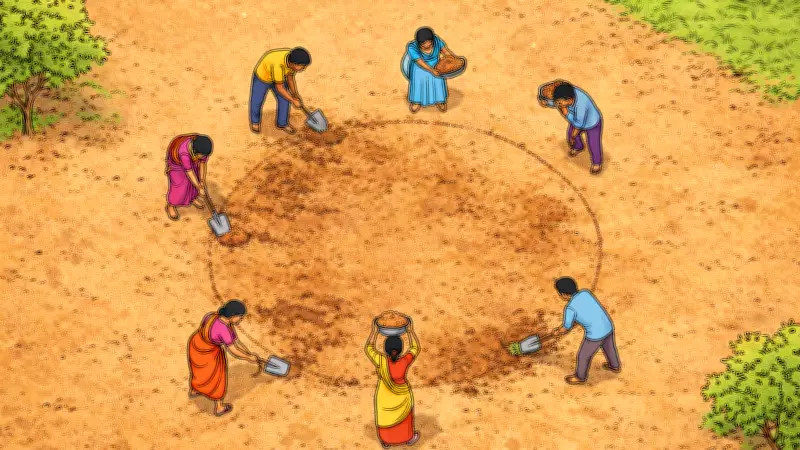
NREGA, often referred to as the world's largest public works program, has had a profound impact on rural India. Over the years, it has generated billions of person-days of employment, directly benefiting millions of households. The scheme not only provided income security but also led to the creation of durable assets like roads, water conservation structures, and irrigation facilities. Studies have shown that NREGA contributed to reducing poverty, empowering women through equal wages, and enhancing agricultural productivity. Its demand-driven nature ensured that employment was available when needed most, particularly during lean agricultural seasons.
Introducing G-RAM: A New Vision for Rural Employment
The G-RAM scheme is proposed as a more streamlined and technology-driven alternative to NREGA. It seeks to address some of the criticisms leveled against NREGA, such as delays in wage payments, corruption, and inefficiencies in implementation. Key features of G-RAM include:

- Digital Integration: Leveraging Aadhaar and mobile technology for faster registration and payment processing.
- Focus on Skill Development: Incorporating training components to enhance employability beyond manual labor.
- Asset Creation Prioritization: Emphasizing projects with long-term economic benefits, like infrastructure and environmental conservation.
- Public-Private Partnerships: Encouraging collaboration with private entities for better resource management.
Proponents argue that G-RAM could modernize rural employment programs, making them more efficient and impactful.
Challenges and Concerns: Can G-RAM Match NREGA's Success?
Despite its ambitious goals, G-RAM faces significant hurdles in living up to NREGA's legacy. Critics point out several potential issues:
- Guarantee of Employment: NREGA's legal guarantee of 100 days of work is a key strength. G-RAM's framework may lack similar statutory backing, risking reduced accountability.
- Implementation at Scale: NREGA's nationwide reach has been tested over decades. G-RAM will need robust systems to avoid the bureaucratic delays that plagued its predecessor.
- Social Inclusion: NREGA's focus on marginalized communities, including women and Scheduled Castes/Tribes, set a high bar. G-RAM must ensure it does not dilute these inclusive aspects.
- Economic Context: With rising rural distress and unemployment, the timing of transitioning from a proven scheme like NREGA to an untested model like G-RAM is contentious.
Experts caution that without careful design and execution, G-RAM could fall short in delivering the same level of social and economic benefits.
Expert Opinions and Future Outlook
Economists and rural development specialists are divided on G-RAM's potential. Some view it as a necessary evolution to adapt to changing technological and economic landscapes. They argue that with proper funding and governance, G-RAM could enhance productivity and create sustainable livelihoods. Others, however, emphasize that NREGA's success lies in its rights-based approach, which G-RAM might undermine if it shifts towards a more discretionary model.

The government's commitment to adequate budgetary allocations and transparent monitoring will be crucial. Lessons from NREGA's implementation, such as the importance of grassroots participation and grievance redressal mechanisms, must inform G-RAM's rollout. As discussions continue, the ultimate test will be whether G-RAM can not only replicate but also build upon the transformative impact that NREGA has had on rural India over the past two decades.