Maharashtra Government to Establish 200 Artificial Insemination Centers
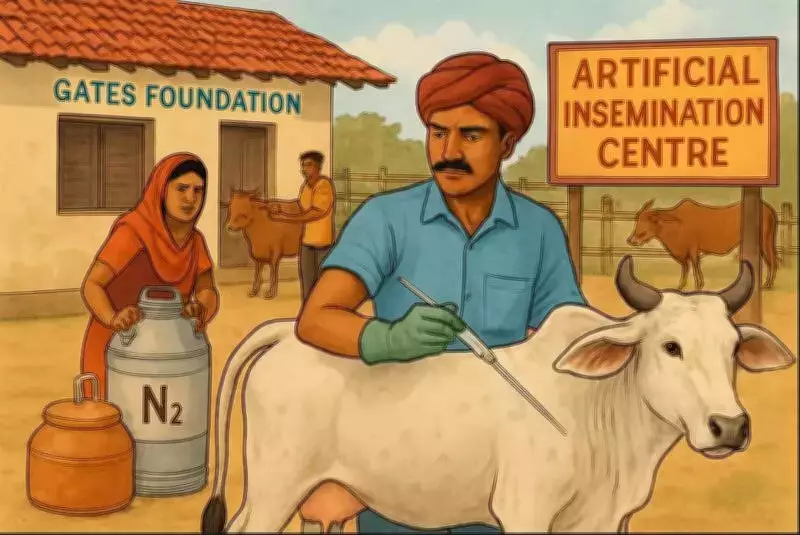
The Maharashtra government has announced a major initiative to strengthen livestock breeding services and boost rural incomes across the state. The plan involves setting up 200 artificial insemination (AI) centers, with partial financial support from the Bill & Melinda Gates Foundation.
Government-Led Implementation with BAIF Partnership
These centers, officially designated as Livestock Development Centres (LDCs), will be managed and implemented by the BAIF Development Research Foundation, an Indian organization, in partnership with the state government. The primary objective is to promote sustainable rural livelihoods through improved animal husbandry practices.
The Gates Foundation's involvement is strictly limited to financial assistance, with all planning, execution, monitoring, and oversight remaining entirely under government-approved systems. This ensures that the program maintains its domestic character while benefiting from international funding support.

Program Objectives and Farmer Benefits
The LDC program aims to help farmers maintain healthier animals, improve milk yields, and strengthen both incomes and food security for rural households throughout Maharashtra. Key goals include:
- Improving local cattle and buffalo breeds through selective breeding
- Increasing the birth of healthy female calves
- Protecting livestock from major diseases through regular vaccination programs
- Expanding access to quality breeding services in rural areas
Participation by farmers will be completely voluntary, and no service under the program will be mandatory. The program explicitly states that it does not involve any ownership, control, or rights over farmers' animals, land, milk, or data.
Service Delivery and Quality Assurance
All services under the program, including artificial insemination, animal healthcare, and vaccination, will be delivered strictly in accordance with government-approved guidelines. The Livestock Development Centres will operate in close coordination with government-approved veterinarians and existing public animal health infrastructure.
This coordination ensures timely, doorstep delivery of services, particularly in villages with limited access to veterinary care. Only government-approved semen, medicines, and veterinary practices will be used, with all inputs sourced from Indian manufacturers to support domestic production.
Employment Generation and Community Impact
Beyond improving animal health services, the program is expected to generate significant local employment opportunities. Village youth will be trained as para-veterinary workers, enabling them to provide basic breeding and animal care services within their own communities.
This approach not only creates sustainable livelihoods but also builds local capacity for ongoing animal healthcare management. The program represents an India-led effort designed to complement and strengthen public livestock services, with international funding support limited solely to financial assistance and no role in program control or decision-making.
The establishment of these 200 centers across Maharashtra marks a significant step toward modernizing livestock management practices while preserving the autonomy of farmers and maintaining the integrity of domestic agricultural systems.