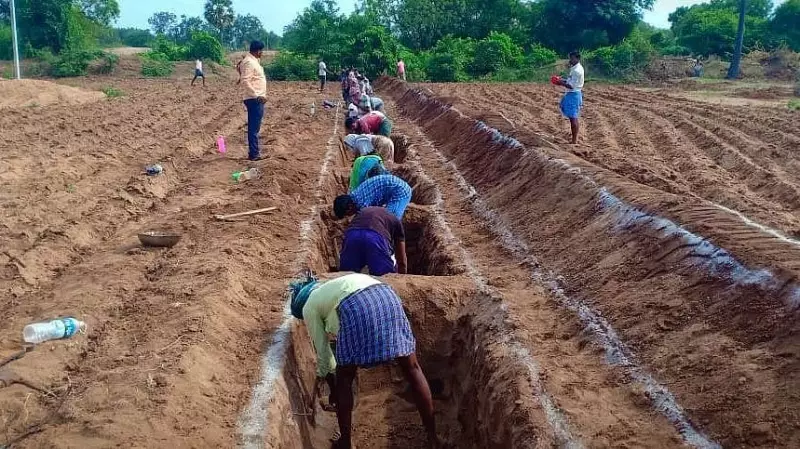
The recent move to rename the Mahatma Gandhi National Rural Employment Guarantee Act (MGNREGA) has ignited a fresh debate on its core mission. While the official action involves a change in nomenclature, analysts argue the fundamental shift lies beneath the surface. The primary objective of providing wage employment through public works in rural areas remains, but the operational philosophy appears to be transforming.
From Demand-Driven to Supply-Driven: A Paradigm Shift
At the heart of the controversy is the proposed transition in the scheme's framework. The original MGNREGA was designed as a 'demand-driven' law, where the government is legally obligated to provide work when rural households demand it. This empowered the rural poor, making employment a right-based entitlement. However, with the new bill, critics point out that this framework is set to give way to a 'supply-driven scheme'.
In a supply-driven model, the government would determine the quantum and location of work based on its own planning and budgetary allocations, rather than being compelled by the demand from workers. This significant change, noted by commentators like Stevenson Jacob and Karamala Areesh Kumar, could alter the very nature of the safety net. The analysis, last updated on 25 December 2025, 19:48 IST, questions whether this structural adjustment addresses the root causes of rural distress or merely repackages the program.

Implications for Rural Employment and Distress
The implications of this shift are profound. A demand-driven act acts as an automatic stabilizer during economic downturns or agricultural lean seasons, scaling up when need is highest. A supply-driven scheme, constrained by pre-determined budgets and targets, may lack this responsiveness. The fear is that it could lead to a situation where work is not available precisely when and where the rural poor need it the most, potentially diluting the act's effectiveness as a tool against poverty and distress.
Proponents of the change might argue for greater administrative efficiency and better alignment with other development projects. Yet, the central question remains: does renaming and reframing MGNREGA enhance its capacity to deliver on the promise of 100 days of wage employment, or does it risk weakening a crucial pillar of India's rural economy?
The Road Ahead: Scrutiny and Outcomes
As the bill moves forward, its impact will be closely watched. The renaming itself may be symbolic, but the underlying policy shift from a rights-based guarantee to a scheme-based allocation warrants serious scrutiny. The ultimate test will be on the ground in India's villages: whether this change leads to more timely work, better wages, and a genuine alleviation of rural distress, or becomes a bureaucratic recalibration that distances the program from its foundational principles. The debate underscores the ongoing challenge of balancing fiscal management with unwavering social security for the most vulnerable.