The central government has unveiled a plan to replace the two-decade-old Mahatma Gandhi National Rural Employment Guarantee Act (MGNREGA) with a new, revamped law. The proposed Viksit Bharat—Guarantee for Rozgar and Ajeevika Mission (Gramin) Bill, 2025, or VB–G RAM G Bill, promises more days of work but introduces a significant shift in funding responsibility, asking states to share the financial burden.
Key Changes: More Days, New Funding Formula
The most prominent change in the new bill is the increase in the guaranteed wage employment from 100 days to 125 days per financial year for rural households. This move is aimed at providing greater income security and helping families cope with rising living costs.
However, a major structural shift accompanies this expansion. The scheme is being moved from a central sector to a centrally sponsored scheme. This means states will now have to share the cost and responsibility. The proposed funding pattern between the Centre and states will be 60:40. For northeastern states, Himalayan states, and certain Union Territories, a more favourable 90:10 split is proposed.

Under the existing MGNREGA framework, states pay 25% of material costs and 50% of administrative expenses. The new cost-sharing model represents a substantial increase in financial commitment for state governments.
Overhaul of Implementation and New Rules
The VB–G RAM G Bill proposes a complete overhaul of how the rural employment guarantee is implemented. It introduces several new mechanisms and rules:
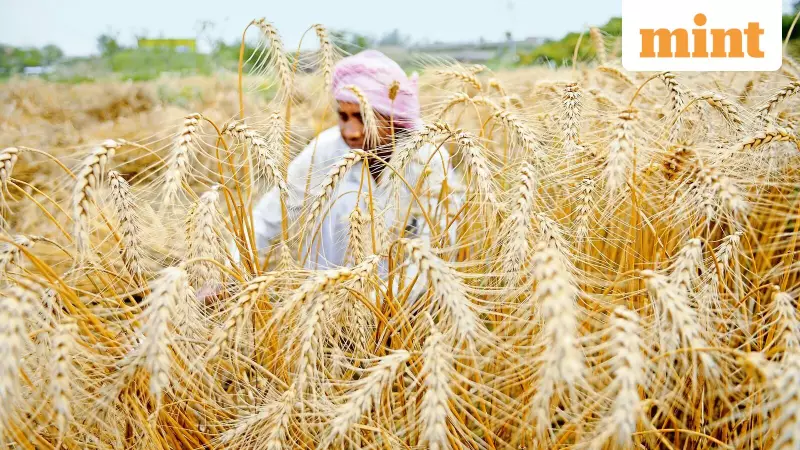
Seasonal Pause: For the first time, the bill proposes pausing employment guarantee work during peak agricultural seasons to ensure the availability of farm labour. States will be required to notify a total period aggregating to 60 days in a financial year, covering sowing and harvesting, during which no work will be provided under the Act.
New Governance Bodies: The bill mandates the constitution of a Central Gramin Rozgar Guarantee Council and State Gramin Rozgar Guarantee Councils for review and monitoring. Steering committees at central and state levels will also be formed to recommend normative allocations and convergence.
Focus on Strategic Infrastructure: The revamped framework sharpens the focus on creating durable rural assets. It prioritizes four categories of works: water security, core rural infrastructure, livelihood-linked assets, and climate-resilient works to build village resilience.
Stricter Accountability: State governments must notify their own schemes to operationalise the guarantee within six months of the Bill’s commencement. If work is not provided to eligible applicants within the stipulated period, states will be obliged to pay an unemployment allowance.
Reactions and Political Context
The proposed changes have drawn mixed reactions. Experts like A.K. Verma, director of the Centre for the Study of Society and Politics (CSSP), welcomed the increase to 125 days but expressed concern over the funding shift. “The 60:40 sharing provision may be inconvenient for states as they are cash-strapped,” he said. However, he noted that shared spending might make states more vigilant in implementation and curb corruption.
The move has ignited political controversy, particularly the renaming of the scheme, which removes Mahatma Gandhi's name. Congress MP K.C. Venugopal criticized the move, calling it an attempt to erase Gandhi from the national psyche and a “cosmetic change to paper over the deliberate neglect” of the scheme. He also pointed to pending wage arrears and reduced allocations.
The government's allocation for MGNREGA in the FY26 budget remained unchanged from the previous year at ₹86,000 crore. Spending had peaked at over ₹1 lakh crore during the COVID-19 pandemic in FY21 but has seen fluctuations in subsequent years.
The agriculture ministry, in a communication, stated that rural India has transformed since 2005, necessitating a new law with stronger convergence to cater to changing aspirations and anchor rural asset creation for the Viksit Bharat 2047 vision.