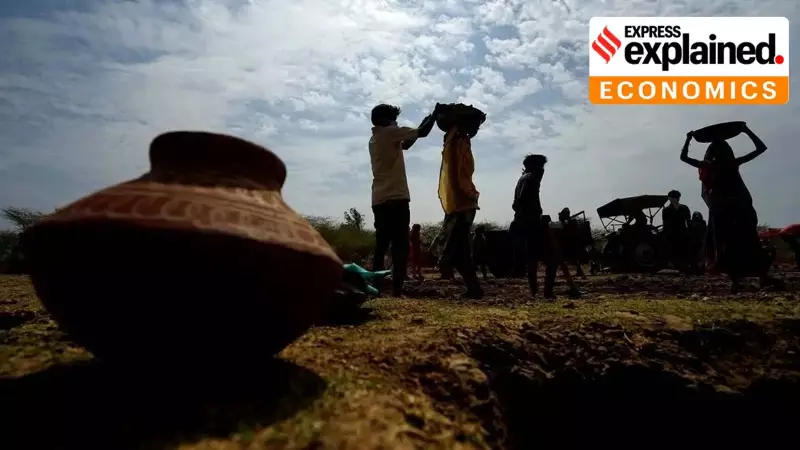
The Indian government is set to overhaul the country's flagship rural employment guarantee framework with a new proposed legislation. The Viksit Bharat-Guarantee for Rozgar and Ajeevika Mission (Gramin) Bill, or VB-G RAM G Bill, seeks to replace the nearly two-decade-old Mahatma Gandhi National Rural Employment Guarantee Act (MGNREGA) of 2005.
Core Changes in the New Rural Jobs Framework
The proposed Bill, as reported in December 2025, introduces several fundamental shifts from the existing MGNREGS model. While it increases the guaranteed wage employment days from 100 to 125 per rural household annually, it simultaneously introduces new financial and operational conditions that could significantly alter the scheme's implementation and accessibility.
The most significant departure is in the funding pattern. Unlike MGNREGA, where the central government bore the entire wage bill, the VB-G RAM G Bill proposes a joint funding model between the Centre and states. For most states, the proposed sharing ratio is 60:40 (Centre:State), while for North Eastern States, Himalayan States, and Union territories like Uttarakhand, Himachal Pradesh, and Jammu & Kashmir, it is 90:10. Union territories without a legislature will have their entire cost borne by the Centre.

This shift comes at a time when state finances are under strain due to factors like the implementation of GST and the Centre's focus on cesses. Estimates suggest this new pattern could impose an additional annual fiscal burden of approximately Rs 30,000 crore on states, based on the previous financial year's expenditure of Rs 1.04 lakh crore under MGNREGA.
Operational Shifts: From Labour Budget to Normative Allocation
The Bill proposes moving away from the existing labour budget system, where states present annual work plans based on anticipated demand. Instead, it introduces a "normative allocation" formula. Under this, the Central Government will determine state-wise annual fund allocations based on objective parameters it prescribes.
Critically, Section 4(6) states that any expenditure incurred by a state exceeding this central allocation must be borne entirely by the state government. This top-down approach could impact states with historically high demand for work, such as Tamil Nadu, Uttar Pradesh, Rajasthan, Bihar, and Andhra Pradesh.
125-Day Guarantee with a Shorter Window
Although the guarantee increases to 125 days, a new provision effectively reduces the window to avail of it. Section 6(1) of the Bill mandates a 60-day pause in the scheme during peak agricultural seasons of sowing and harvesting to ensure farm labour availability. States are to notify this period in advance, which could vary by agro-climatic zone.
This is a notable change, given India's diverse agricultural calendar. For instance, paddy sowing and harvesting spans many months, and the pause could compress the time available for workers to claim their 125 days. In practice, the 100-day guarantee under MGNREGA has rarely been fully utilized by households. In 2024-25, the average employment per household was only about 50 days, with just 6.74 lakh families reaching the 100-day ceiling in the current financial year.
Other key features of the VB-G RAM G Bill include:

- Viksit Gram Panchayat Plans: All works must originate from these plans, consolidated at block, district, and state levels, and aligned with national priorities like water security, core rural infrastructure, livelihood infrastructure, and extreme weather mitigation.
- Gramin Rozgar Guarantee Card: This will replace the existing job card, with a validity of three years instead of five. Special cards of a distinct colour will be issued to vulnerable groups like single women, persons with disabilities, and transgender persons.
- Higher Penalty: The penalty for violating provisions is proposed to be raised from Rs 1,000 to Rs 10,000.
- Estimated Budget: The Rural Development Ministry estimates the new scheme's annual requirement at Rs 1,51,282 crore (including state share), with a central share of Rs 95,692.31 crore. This compares to the Rs 86,000 crore allocated for MGNREGS in the current financial year.
The proposed VB-G RAM G Bill represents a radical revamp of India's rural social security architecture, aiming to align it with national development goals under the Viksit Bharat mission. However, it shifts a substantial financial responsibility onto states and introduces new conditions that will redefine how the rural poor access guaranteed work.