

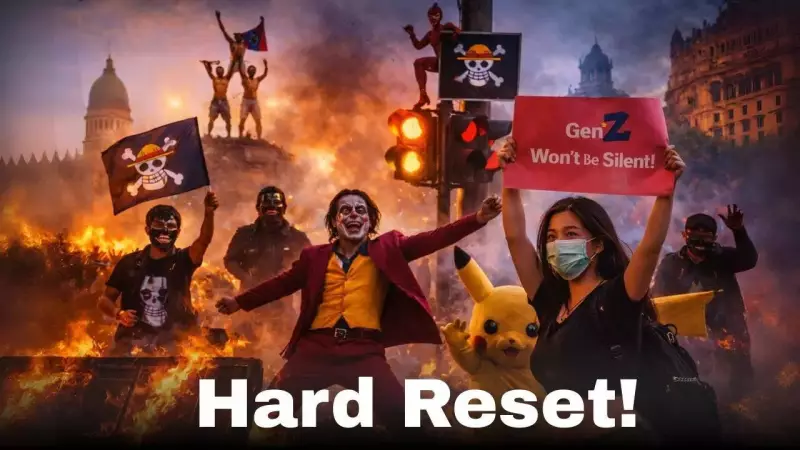
The year 2025 witnessed a seismic shift in global politics, not led by seasoned politicians or established parties, but by a generation often dismissed as apathetic. Generation Z, tired of being sidelined and disillusioned by economic stress and governance failures, globally transitioned from online discontent to real-world action. This was not a fleeting trend but a fundamental move from digital vibes to tangible voice, disrupting power structures from the Himalayas to Latin America with a distinct blend of seriousness and cultural flair.
Asia's Youth Uprising: From Himalayan 'Vidroh' to Turkish 'Gösteri'
In Nepal, a simmering frustration over corruption, digital freedom restrictions, and the lavish lifestyles of political elites exploded into a full-blown political crisis by September 2025. Student groups, first-time voters, and unemployed graduates formed the movement's core. The protests escalated beyond rallies, with demonstrators marching directly to the legislature, arguing formal politics had excluded them. Clashes with security forces resulted in dozens of deaths and injuries, fueling nationwide virodh (opposition) against the government.
The pressure proved overwhelming. Within 48 hours of intense, youth-driven mobilisation, Prime Minister KP Sharma Oli resigned, marking one of the year's most direct instances of youth power forcing a top-level change. The protests were captured in a distinctly Gen Z manner: amid chaos, young people filmed reels, struck Bollywood-inspired poses, and broke into spontaneous dances, blending resistance with viral creativity.

Similarly, in Turkey, Gen Z took to the streets in Istanbul, Ankara, and Izmir, driven by economic pressures and shrinking civic space. While sporadic, these protests gained global attention for their unique symbolism. Viral images showed demonstrators dressed as Pikachu and Batman clashing with police, a powerful visual metaphor that amplified their message beyond borders. The protests, sparked by issues like high inflation and the arrest of opposition mayor Ekrem Imamoglu, highlighted a generation moving from online expression to street-level action.
Global Echoes: Basic Survival and Democratic Demands
The wave of activism was not confined to Asia. In Madagascar, protests triggered by chronic water and power shortages spread rapidly via encrypted chats and social media. Led by students and underemployed youth without formal leadership, the movement framed its anger as a response to everyday deprivation, forcing the government into concessions.
In Morocco, young people mobilised under the informal banner "Gen Z 212" with persistent, peaceful demands for better healthcare, education, and jobs. Avoiding direct confrontation with the monarchy, they targeted governance failures, demonstrating a pragmatic yet confident push for reform.
Latin America saw a vibrant surge. In Peru, Gen Z protested economic mismanagement and corruption, blending street marches with online campaigns. Mexico witnessed thousands marching for electoral transparency and security, their protests notable for pop-culture symbolism like the Jolly Roger flag from the anime 'One Piece'. In Argentina, youth joined demonstrations against President Javier Milei's austerity measures, arguing the economic burden was unfairly shifted onto them.
Even in smaller nations like Timor-Leste, youth influence was clear. Student-led protests against plans for lawmakers to buy luxury vehicles forced parliament to reverse the decision within days, proving targeted pressure could yield swift results.
The Unifying Thread: A Decentralised, Pragmatic Awakening
A common pattern emerged across these diverse movements. They were largely decentralised, digitally organised, and sceptical of charismatic leadership. The driving force was not abstract ideology but lived experience—economic insecurity, unaccountable governance, and stolen futures.

While these agile movements often lacked long-term organisational structures, raising questions about sustainability, their impact in 2025 was undeniable. By year's end, Gen Z had shattered the myth of their disengagement. They proved they could organise, mobilise, and demand a seat at the table, compelling governments worldwide to take notice. The streets, far from being obsolete, became the stage where a generation decided to show up and be counted.





