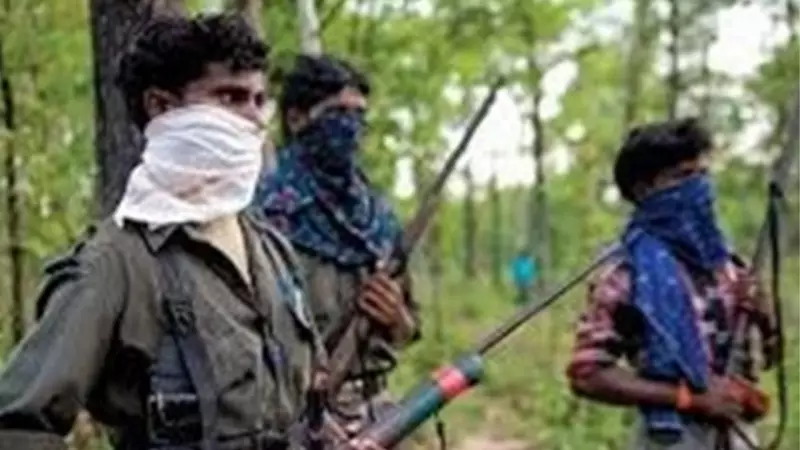
In a significant development for the state's security apparatus, Odisha police have secured the mass surrender of at least 22 Maoist cadres in Malkangiri district. This event comes just days after the state government announced a sharp increase in financial rewards under its revised surrender and rehabilitation policy.
First Mass Surrender of the Year
This marks the first mass surrender of the year in Odisha, a state where nine districts continue to grapple with Maoist influence. The affected districts are Kalahandi, Kandhamal, Balangir, Malkangiri, Koraput, Nabarangpur, Nuapada, Rayagada, and Boudh. Notably, six of these—Koraput, Malkangiri, Kalahandi, Nabarangpur, Nuapada, and Balangir—share their borders with Chhattisgarh, a state that remains a stronghold for Left-Wing Extremist (LWE) activity.
While Director General of Police Y. B. Khurania was expected to share official details later on Tuesday, police sources confirmed that the surrendered individuals include senior-ranking members. The list comprises ACMs and DCMs, each of whom carried individual bounties ranging from Rs 5.5 lakh to Rs 27.5 lakh.

Revised Policy: A Strategic Incentive
The timing of the surrender is directly linked to a strategic policy revision announced by the Odisha government on November 27. The new policy sets reward amounts at 10% higher than those offered in neighbouring Chhattisgarh. Officials stated that this enhanced incentive structure is specifically designed to encourage Maoists, nearly 95% of whom hail from Chhattisgarh and form the bulk of Odisha's active cadre, to lay down their arms within Odisha.
Police authorities believe this financial strategy will significantly strengthen counter-insurgency operations and weaken the LWE network in the state. The revised reward scale represents a substantial four- to five-fold increase compared to the last update in 2014.
Breaking Down the New Reward Structure
The new policy ensures Odisha's rewards surpass Chhattisgarh's by a clear 10% margin across all ranks. For instance:
- A central committee member, who carries a bounty of Rs 1 crore in Chhattisgarh, will now be eligible for Rs 1.10 crore in Odisha, a dramatic rise from the previous Rs 25 lakh. With an additional state incentive of Rs 10 lakh, the total potential reward reaches Rs 1.20 crore.
- A state committee or special zonal committee member, valued at Rs 50 lakh in Chhattisgarh, will now receive Rs 55 lakh in Odisha, up from a prior cap of Rs 20 lakh.
- Even the lowest-rung Dalam or party member, offered Rs 1.5 lakh in Chhattisgarh, will now get Rs 1.65 lakh in Odisha, increased from Rs 1 lakh.
Implications for Security in Odisha
The successful surrender of 22 cadres, including senior leaders, is seen as a direct and immediate validation of the revised policy's effectiveness. It deals a psychological and operational blow to Maoist formations operating in the region, particularly in the sensitive districts bordering Chhattisgarh. Security analysts view this as a critical step in persuading more cadres to abandon the path of violence and opt for rehabilitation, thereby eroding the strength of Left-Wing Extremism from within.
The Odisha government's proactive approach in offering more lucrative terms than its neighbour is a calculated move to disrupt the cross-border movement of cadres and incentivize surrenders locally. This event in Malkangiri is likely just the beginning, as police anticipate more such surrenders in the coming months, potentially leading to a significant decline in LWE-related incidents in the state.