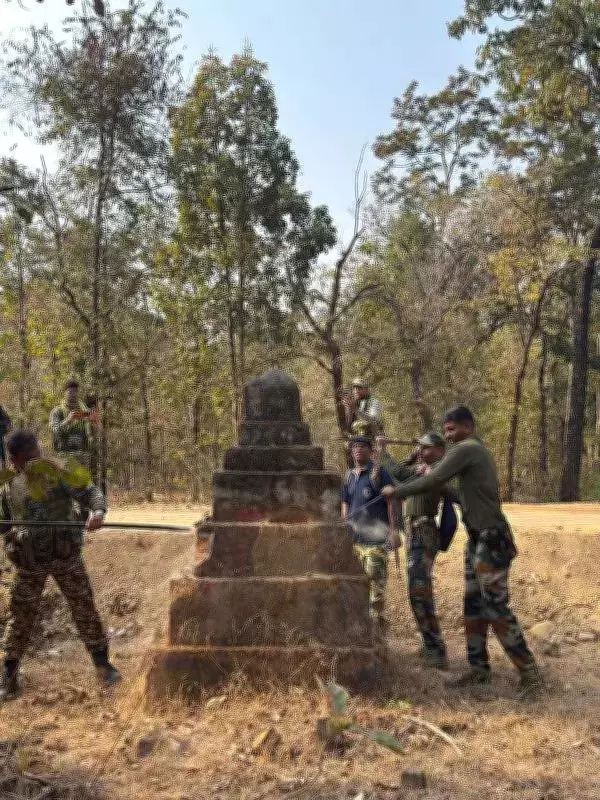
Security Forces Launch Major Operation to Demolish 44 Maoist Memorials
In one of the most significant symbolic anti-Maoist actions recorded this year, elite C-60 commandos and Central Reserve Police Force units executed a meticulously coordinated operation on Wednesday, successfully demolishing forty-four Maoist memorials across remote forest areas. This strategic move represents a profound psychological and symbolic defeat for the guerrilla forces, effectively stripping away one of their final remaining tools of influence within tribal hinterlands as authorities work toward the critical March 31 deadline to eradicate left-wing extremism completely.
Targeting the Ideological Heartland of Maoist Movement
The operation specifically targeted locations deep inside Abujmarh, the densely forested region long regarded as both the ideological and military epicenter of the banned Communist Party of India (Maoist). This area has historically served as the backbone of what security analysts term the Red Corridor. The demolished structures included concrete plinths, stone tablets, and commemorative plaques that had been erected to immortalize slain People's Liberation Guerrilla Army cadres as revolutionary martyrs.
These memorials served dual purposes for the Maoist organization: instilling fear and dread among local tribal populations while simultaneously attempting to lure new recruits with narratives of revolutionary sacrifice and ideological commitment. Their destruction represents a critical blow to the Maoist propaganda machinery that has operated in these regions for decades.
Massive Coordinated Effort Involving Multiple Security Units
On Wednesday, approximately eight hundred personnel drawn from eighteen specialized teams executed the systematic destruction across multiple remote forest pockets. The operation involved:
- Special Operations Teams trained in counter-insurgency tactics
- Bomb Detection and Disposal Squads ensuring operational safety
- Local police posts providing crucial ground intelligence
The memorial destruction was geographically distributed as follows:
- Eighteen memorials in Etapalli region
- Seventeen memorials in Hedri area
- Five memorials in Bhamragad territory
- Two memorials in Jimlagatta sector
- One memorial each in Dhanora and Pendhari locations
Residents of formerly Maoist-affected villages including Pengunda, Kawande, Tumarkothi, Gardewada, Wangeturi, and Gatta (Jambia) witnessed bomb disposal squads meticulously clearing the sites of potential explosives before demolition commenced, ensuring civilian safety throughout the operation.
Official Statements Highlight Progress Toward Normalcy
Gadchiroli Superintendent of Police Neelotpal described the operation as a decisive step toward restoring normalcy in the region. "The Maoist movement in Gadchiroli district has almost been eradicated through sustained efforts," he stated. "By removing these symbols of terror, we are not only eliminating physical reminders of violence but also actively rebuilding trust and security among the people who have suffered the most from decades of conflict."
The action was executed under the direct supervision of senior officers including Additional Superintendents of Police M. Ramesh, Kartik Madheera, Gokul Raj G., and Deputy Superintendent Vishal Nagargoje. These officials emphasized that years of sustained security operations, strategic surrenders, and comprehensive development outreach have already dramatically shrunk Maoist operational space throughout the region.
The demolition of these forty-four memorials represents more than just physical destruction—it signifies the dismantling of psychological strongholds that have maintained Maoist influence in tribal areas for generations. As security forces continue their push toward the March 31 deadline, this operation stands as a testament to the changing dynamics in India's long-standing battle against left-wing extremism.