Advocate Files Petition Against Bar Council's Election Deposit in Bombay High Court
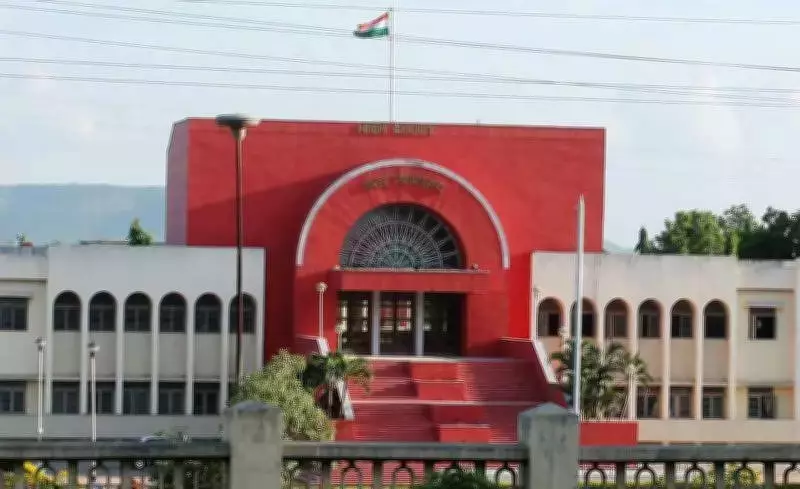
An advocate from Chhatrapati Sambhajinagar has initiated legal action by filing a writ petition before the Aurangabad bench of the Bombay High Court. The petition challenges the Bar Council of Maharashtra and Goa's (BCMG) Election Notification issued on January 22, which mandates a non-refundable deposit of Rs 1.25 lakh for advocates wishing to contest in the upcoming elections scheduled for March 24.
Petition Seeks to Quash Deposit and Demand Reservations
Advocate Shirish Kamble, the petitioner, has requested the court to quash and set aside the prescribed deposit, labeling it as illegal, arbitrary, exclusionary, and violative of constitutional provisions. In addition to this, Kamble has prayed for the implementation of effective and enforceable vertical reservations for OBC, SC, and ST advocates in the BCMG elections. The petition, registered on February 9, is slated for a hearing on February 13, as per details on the high court's official website.
Kamble has also submitted an objection with the BCMG office in Mumbai, urging a reduction in the deposit amount. He contends that the Amravati bench of the Andhra Pradesh High Court, on January 5, 2026, had previously quashed and set aside the Bar Council of India's (BCI) proceedings from September 25, 2025, which supported raising the non-refundable security deposit from Rs 30,000 to Rs 1.25 lakh for all State Bar Council elections. According to Kamble, this makes the BCMG's insistence on the Rs 1.25 lakh deposit legally unsustainable.

BCMG Chairman Defends Deposit as Per Supreme Court Directive
When contacted, BCMG Chairman Harshad Nimbalkar stated that the election is being conducted in accordance with a Supreme Court directive for phase-wise elections of all State Bar Councils. He emphasized that the non-refundable security deposit of Rs 1.25 lakh was decided by the BCI for all state bar council elections and has been ratified by the Supreme Court. Nimbalkar referenced a recent decision by a bench headed by the Chief Justice of India, which upheld the fee structure.
On February 5, the Supreme Court allowed petitions by the BCI to transfer multiple cases pending in different High Courts regarding this issue to the apex court. The SC noted that the fee was levied on a pan-India basis to cover the total expenditure likely to be incurred by every State Bar Council. It highlighted the precarious financial condition of several State Bar Councils, exacerbated by reduced registration fees following the Gaurav Kumar v. Union of India judgment from July 30, 2024.
Supreme Court's Rationale for Upholding the Deposit
The Supreme Court bench articulated that contesting an election is an optional choice for bar members. It argued that failing to levy a reasonable fee for election expenditure would shift costs to all members, including those not interested in participating as candidates. This, in turn, could impose a financial burden on young lawyers early in their careers. The bench approved the BCI's decision to recover such expenditure from election candidates, stating that serious candidates should bear the costs of their election participation.
In its ruling, the SC expressed a considered opinion that there is no necessity for any High Court to interfere with the prescribed fee structure for State Bar Council elections. Consequently, all relevant cases pending before different High Courts were dismissed, reinforcing the BCI's stance on the deposit requirement.