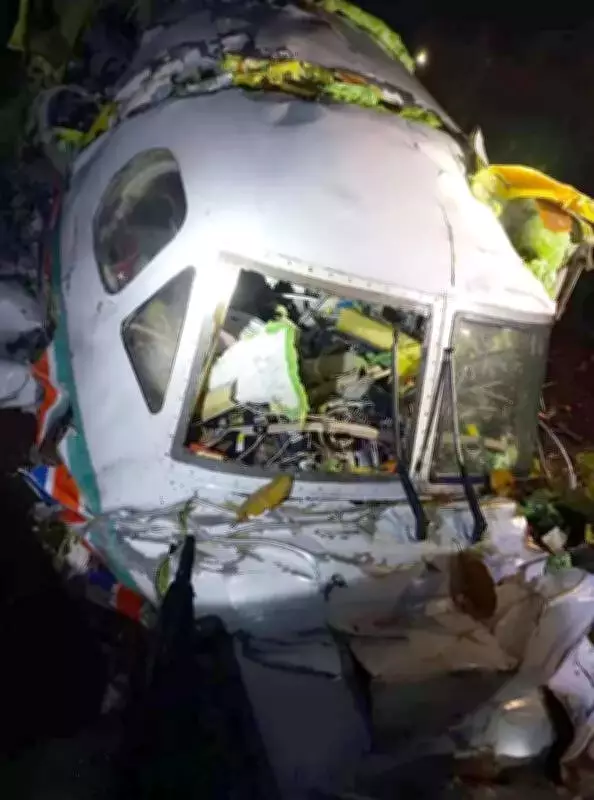
Ranchi-Delhi Air Ambulance Crash: No Distress Call Before Fatal Descent
In a tragic aviation incident, an air ambulance traveling from Ranchi to Delhi crashed approximately thirty minutes after takeoff, resulting in the deaths of all seven individuals on board. Preliminary investigations reveal that the aircraft did not issue any distress signal before vanishing from radar screens, raising critical questions about communication protocols and weather preparedness.
Flight Path and Final Communications
The turbo-propeller Beechcraft King Air C90A aircraft departed from Ranchi with a planned route to Delhi. According to aviation sources, the pilot initially requested and was granted clearance to climb to an altitude of 16,000 feet. At 7:30 PM, the pilot contacted air traffic control again, this time seeking permission to maintain a lower altitude of 14,000 feet, which officials approved. This exchange marked the final communication between the cockpit and controllers.
Exactly four minutes after this last contact, the aircraft disappeared from radar at the Atali point, a location situated about 90 nautical miles northwest of Ranchi and 104 nautical miles southeast of Varanasi. The controller at Kolkata airport, who was monitoring the flight, triggered an alarm when the blip vanished and subsequent attempts to reach the captain or co-pilot via radio proved unsuccessful.
Weather Warnings and Meteorological Oversight
Officials at the meteorological center in Ranchi confirmed that weather advisories had been issued well in advance of the flight. PP Baburaj, head of the Ranchi Met centre, stated that rainfall and thunderstorm warnings were disseminated at 11 AM and again at 5:10 PM on the day of the incident. "In the morning, a bulletin was sent out, forecasting rainfall and thunderstorms accompanied by lightning in north-west and central Jharkhand. All pilots should have received the warning. At 5:10 PM, we issued a Nowcast of light thunderstorms with rain in some districts in the north-west sector," Baburaj explained.
Despite these alerts, the crew of the Beechcraft aircraft did not contact the meteorological center before takeoff. This omission is particularly concerning given the known risks associated with adverse weather conditions for smaller aircraft.
Expert Analysis on Potential Causes
Aviation experts have speculated on possible factors that may have contributed to the crash. One theory suggests that a lightning strike could have impaired the aircraft's transponder and electrical systems, disrupting communication and navigation capabilities. Additionally, the low flight level maintained by the pilot might have interfered with the Very High Frequency (VHF) system, further complicating contact with air traffic control.
For smaller aircraft like the Beechcraft, navigating through severe weather can be exceptionally hazardous. Cumulonimbus clouds, which are often present during thunderstorms, pose severe safety risks including:
- Violent turbulence
- Intense lightning strikes
- Heavy icing on aircraft surfaces
- Hail damage
- Extreme wind shear capable of compromising structural integrity
These conditions are not merely uncomfortable but can be life-threatening, especially for aircraft not equipped to handle such extremes. The pilot's request for a weather deviation indicates an awareness of challenging conditions, yet the absence of a distress call prior to the crash remains a pivotal point of investigation.
Investigation and Safety Implications
The incident underscores the critical importance of adherence to weather protocols and effective communication in aviation safety. Authorities are now focusing on why the crew did not engage with meteorological warnings and what led to the sudden loss of contact. The crash serves as a somber reminder of the vulnerabilities faced by air ambulances and smaller aircraft operating in potentially volatile atmospheric conditions.
As the investigation progresses, findings will likely influence future safety measures and training protocols for pilots and crews, aiming to prevent similar tragedies in the future. The aviation community awaits detailed reports to understand the full sequence of events that culminated in this devastating loss.