

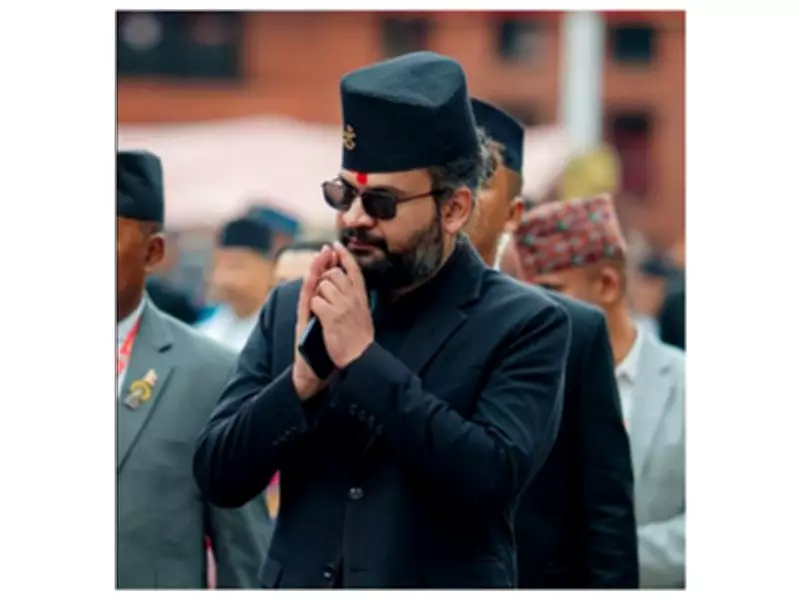
Rapper-Turned-Politician Balen Shah Takes Oath as Nepal's 47th Prime Minister
In a historic moment for the Himalayan nation, Balendra Shah, popularly known as 'Balen,' was sworn in as Nepal's 47th prime minister on Friday. The 35-year-old leader of the Rastriya Swatantra Party (RSP) took the oath of office at a ceremony held at the President's Office in Sheetal Niwas, Kathmandu, at the auspicious time of 12:34 pm.
A Young and Groundbreaking Leader
Balen, who is also an engineer by profession, has made history by becoming the youngest person ever to assume the prime ministerial office in Nepal. Additionally, he is the first individual from the Madhes region to hold this top executive post, marking a significant shift in the country's political landscape.
His appointment was formalized by President Ram Chandra Paudel earlier in the day, in accordance with Article 76 (1) of the Nepalese constitution. This makes Balen the first democratically elected prime minister to be sworn in since the coalition government led by former prime minister K P Sharma Oli was ousted in September last year.

Background of Political Upheaval
The ousting of Oli's government came after a massive Gen-Z protest that shook the nation. The youth-led movement, which erupted against issues such as corruption, nepotism, and a social media ban, escalated into violence and ultimately led to the government's downfall. Following this, former chief justice Sushila Karki served as the interim prime minister on the recommendation of the Gen Z group.
Balen's rise to power is closely tied to this wave of change. In the March 5 general elections, he achieved a remarkable victory by defeating four-time prime minister Sharma Oli in the Jhapa-5 constituency. This area had long been a stronghold of the Communist Party of Nepal (Unified Marxist-Leninist), but Balen won by a huge margin, signaling a shift in voter sentiment.
Landslide Electoral Victory
The Rastriya Swatantra Party secured a landslide victory in the March 5 polls, winning a massive 182 seats out of the total 275 seats in the House of Representatives (HoR). This overwhelming majority makes the RSP eligible to form a majority government without the need for coalitions.
Of the 275 HoR members, 165 are elected through direct voting and 110 through proportionate voting. The RSP's success almost wiped out traditional political parties, with the Nepali Congress winning only 38 seats, followed by the Communist Party of Nepal-Unified Marxist-Leninist (CPN-UML) with 25 seats, and the Nepali Communist Party securing just 17 seats.
Unique Swearing-In Ceremony
Balen's swearing-in ceremony was a unique blend of Hindu and Buddhist religious traditions, reflecting Nepal's diverse cultural heritage. The event featured elaborate rituals, including Shankhanad (conch blowing) by seven brahmins, recitation of Vedic hymns or Swasti Bachan by 108 Hindu Batuks (young brahmins), and Mangal Bachan or recitation of Buddhist scripture by 107 Lamas.
Government Formation and Future Plans
On the same day as his swearing-in, the newly elected HoR members, including Balen, took the oath of office at the federal parliament building. This marks the beginning of the government formation process, three weeks after the voting concluded.
Sources indicate that Balen is likely to form a small cabinet, with the number of ministers ranging between 15 and 18. This move is expected to streamline governance and address the pressing issues that fueled the Gen-Z protests, such as corruption and lack of opportunities for youth.
As Nepal embarks on this new political chapter under Balen's leadership, all eyes will be on how his administration tackles these challenges and implements reforms to meet the aspirations of the younger generation.






