

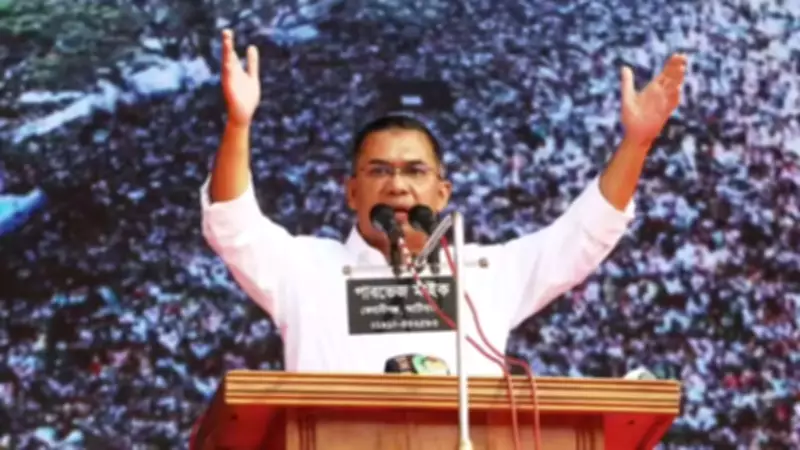
Bangladesh Prime Minister Denounces 1971 Pakistani Military Atrocities on Genocide Day
In a powerful statement commemorating Genocide Day, Bangladesh's Prime Minister Tarique Rahman strongly condemned the brutal actions of the Pakistani military during Operation Searchlight on March 25, 1971. He described the events as one of the most heinous genocides in history, targeting unarmed civilians in Bangladesh.
A Dark Chapter in History
Rahman, in a letter shared online, labeled March 25 as a disgraceful and brutal day, emphasizing that the Pakistani occupation forces executed a pre-planned massacre. "On that dark night, the Pakistani occupation forces carried out one of the most heinous genocides in history against the unarmed people of Bangladesh in the name of 'Operation Searchlight'," he wrote, underscoring the systematic nature of the violence.
Specific Atrocities and Resistance
The Prime Minister detailed how the Pakistani army indiscriminately opened fire on teachers and students at Dacca University, as well as innocent civilians in areas like Pilkhana and Rajarbāgh Police Lines. In response, the 8th East Bengal Regiment in Chattogram formally initiated armed resistance by declaring 'We revolt', sparking a nine-month-long Liberation War.

Historical Context and Aftermath
These attacks followed the 1971 general election results in Pakistan, where Sheikh Mujibur Rahman emerged victorious. Shortly after, he was arrested by the Pakistani army, which then launched large-scale violence against the Bengali-speaking population. Bangladesh is set to celebrate its 56th Independence Day, reflecting on this painful history amidst recent political changes.
Recent Political Developments and International Recognition
Earlier this year, Bangladesh concluded its general elections after prolonged violence and protests, resulting in the ousting of Sheikh Hasina's government. Tarique Rahman's BNP party secured a landslide victory in the February elections. Concurrently, US Congressman Greg Landsman introduced a resolution in the House of Representatives seeking to recognize the 1971 atrocities as war crimes and genocide, highlighting ongoing efforts for justice.






