

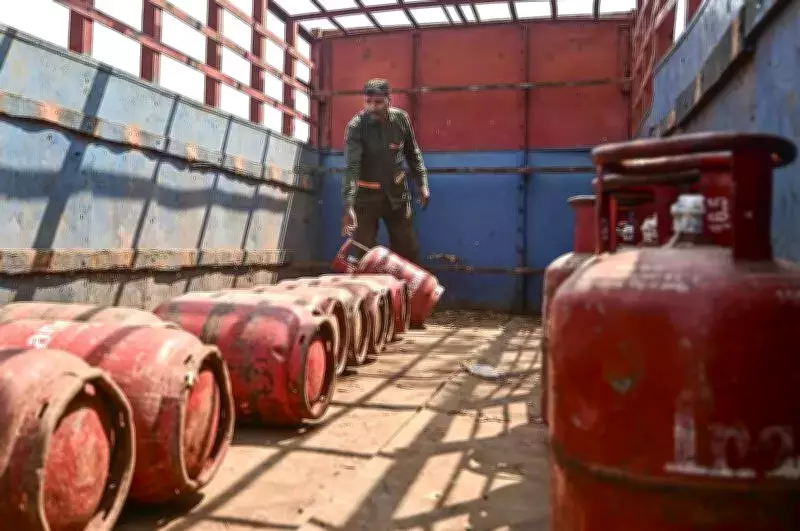
Bengaluru High Court Declines Judicial Intervention in Hotel LPG Supply Dispute
The Karnataka High Court has disposed of a significant petition filed by the Bangalore Hotels' Association and other stakeholders, which sought judicial directions to ensure an uninterrupted supply of commercial LPG cylinders to hotels and restaurants across Bengaluru. In a detailed ruling, the court declined to exercise judicial review, emphasizing that such matters fall squarely within the domain of executive policy.
Court Cites Executive Policy and International Complexities
Justice Sachin Shankar Magadum, presiding over the case, noted the court's cognisance of a Bombay High Court order referenced by the central government. The judge articulated a clear stance on the limitations of judicial intervention in policy-driven issues. "The issue of LPG supply constitutes complex international developments, and policy responses are necessitated thereby," Justice Magadum observed.
He further elaborated that matters pertaining to the allocation, distribution, and prioritization of essential commodities, especially during periods of global uncertainty and constrained supply, are inherently executive functions. "Therefore, this court is of the view that though the petitioner-association has sought certain directions, any necessary directives, if issued, would trench upon executive policy making," the judge stated.

Judicial Review Boundaries Highlighted
The ruling underscored that judicial review under Article 226 of the Constitution, while broad in scope, is not intended to supplant executive wisdom in sensitive domains. Justice Magadum highlighted that such decisions are informed by technical, economic, and geopolitical considerations, making them unsuitable for judicial overreach.
"This is a highly sensitive domain involving national resources, international supply chains, and competing sectoral demands," he added, reinforcing the court's position that the executive branch is better equipped to handle these multifaceted challenges.
Impact on Bengaluru's Hospitality Sector
The petitioners had argued that the restriction on commercial LPG supply has had a severe impact on Bengaluru's hospitality industry. According to their claims, approximately 6 lakh employees working across 40,000 hotels and restaurants in the city have been affected by the supply constraints.
Moreover, the association contended that the closure or reduced operations of hotels have created a ripple effect, adversely impacting milk suppliers, the poultry industry, and suppliers of meat, eggs, and vegetables. This highlights the broader economic ramifications of the LPG supply issues on local supply chains and livelihoods.
Context of Global and National Factors
The court's reference to "complex international developments" and "global uncertainty" points to the broader geopolitical and economic factors influencing LPG supply chains. While the petition focused on local concerns, the ruling acknowledges that such commodity allocations are often tied to larger national and international dynamics, including trade policies and resource management strategies.
This decision sets a precedent for similar cases, emphasizing the judiciary's reluctance to intervene in policy matters that require specialized executive oversight. It also underscores the challenges faced by industries reliant on essential commodities during times of supply chain disruptions.
As Bengaluru's hospitality sector navigates these constraints, the ruling leaves the resolution of LPG supply issues to governmental policy mechanisms, urging stakeholders to seek redress through administrative and legislative channels rather than judicial avenues.






