
In a powerful and introspective farewell address, Justice Mahesh S Sonak of the Bombay High Court declared that silence becomes a crime when there is a duty to speak, a sentiment he stated would be difficult for the institution to forgive. The judge, who served on the Bombay bench for nearly 12 years, made these remarks at a full court farewell reference held in his honour on Wednesday.
A Call to the Bar: Be Guardians, Not Just Advocates
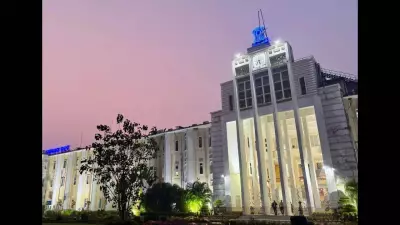
The event, organised at the Central Court (Room 46) in the Bombay HC's principal seat building in Mumbai's Fort area, saw Justice Sonak outline the profound responsibility of the legal fraternity. He is set to assume the role of Chief Justice of the Jharkhand High Court later this week, following the retirement of the incumbent, Justice Tarlok Singh Chauhan, on January 8.
Justice Sonak emphasised the unique role of lawyers, stating that the bar is, and has always been, the judge of the judges. He clarified that this was not meant in a hostile or judgemental spirit, but in a spirit of guardianship. He urged lawyers to rise to the occasion and act as the moral, spiritual, and intellectual mentors of the bench.
"As judges, we do not deserve praise for doing what we ought to do," Justice Sonak remarked. He referenced Oliver Wendell Holmes, noting the human tendency to prefer ruin by praise over salvation by criticism. While acknowledging that praising judges for mythical excellence is pleasant, he stressed that correcting a judge who strays from the path of rectitude is infinitely better and critically crucial.
The Crime of Silence and a Legacy of Judicial Activism
Elaborating on the core theme of his address, Justice Sonak placed a great responsibility on a strong bar. "It is a crime to remain silent when there is a duty to speak," he reiterated. He concluded with a poignant thought: the institution will not remember the insults of enemies, but it will be sad and difficult for it to forget and forgive the silence of the bar, whose members are its legitimate guards and guardians.
Justice Sonak's own career reflects a commitment to this principle of speaking up. The second senior-most puisne judge at the Bombay HC, born on November 28, 1964, he was elevated as an Additional Judge on June 21, 2013. Among several notable actions, he initiated a suo motu case based on an alleged assault on a lawyer by constables of the Porvorim police station.
From Goa Bench to National Stage
Having practised at the Panaji bench after enrolling as an advocate in 1988, Justice Sonak handled diverse matters including constitutional, environmental, and tax law. As the senior-most administrative judge in Goa, he also drew public attention for registering a living will and pledging his organs to promote awareness on end-of-life planning.
His judicial pronouncements have had significant impact. He upheld the constitutional validity of Goa’s Green Cess Act, which funds carbon footprint reduction. In a key ruling concerning Mumbai's Metro Line-3 project in July last year, a bench he led affirmed that the city's development march cannot be halted, but it cannot run roughshod over concerns for preserving heritage structures, a observation made while addressing concerns about the century-old J N Petit Institute building.
Justice Sonak's farewell speech, blending philosophical reflection with a clear-eyed charge to his colleagues, marks the transition of a jurist known for his principled stands as he prepares to lead the Jharkhand High Court.