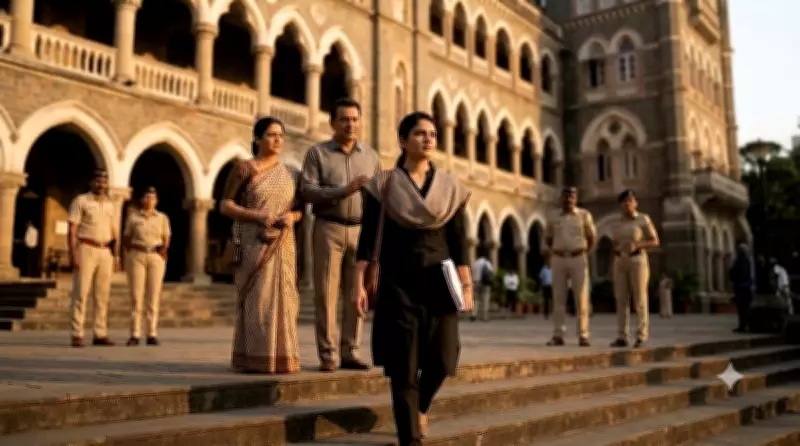
The Bombay High Court has ruled that the state cannot force an adult woman to return to her parents' home, emphasizing that police cannot treat her as a missing person or take coercive measures to ensure her return. The judgment, delivered on July 7, 2026, reinforces the legal principle that adult individuals have the right to choose their place of residence.
Court's Observation on Individual Autonomy
A division bench of Justices Revati Mohite-Dere and Sharmila Deshmukh stated that an adult woman's decision to live separately from her parents is a matter of personal choice and cannot be overridden by state intervention. The court noted that the police have no authority to treat such cases as missing person complaints if the woman is voluntarily staying elsewhere.
Background of the Case
The ruling came in response to a petition filed by a woman who alleged that her parents had filed a missing person complaint with the police after she left their home. She claimed that the police were pressuring her to return to her parents' residence against her will. The court intervened, directing the police to close the missing person case and refrain from any coercive action.

Legal Implications
The judgment underscores the constitutional right to personal liberty under Article 21 of the Indian Constitution. The bench observed that an adult woman's autonomy cannot be curtailed by familial expectations or state action. The court warned that any attempt to forcibly return an adult woman to her parents' home would amount to illegal detention.
Impact on Police Procedures
The High Court's decision is expected to guide police departments across Maharashtra in handling similar cases. Police officers must now verify the voluntary nature of an adult's absence before registering a missing person complaint. The ruling also clarifies that family disputes over residence do not warrant police intervention unless there is evidence of coercion or criminal activity.
Reactions to the Verdict
Women's rights groups have welcomed the judgment, calling it a significant step toward protecting individual freedoms. Advocate Sneha Joshi, representing the petitioner, said, "This ruling affirms that adult women have the right to live where they choose without state interference." The court's decision is likely to be cited in future cases involving similar issues of personal liberty and family disputes.