Bombay High Court to Deliver Formal Orders on Asiatic Society Election Dispute
The Bombay High Court has indicated that elections for the managing committee of the historic Asiatic Society can proceed under the supervision of an administrator appointed by the charity commissioner. However, the court has reserved its formal orders on the contentious election process for Friday, following extensive arguments from both sides.
Legal Battle Over Voter List Scrutiny
Justice Farhan Dubash emphasized the need for a practical order to facilitate a fresh election process after significant disputes emerged regarding the scrutiny of voter lists. The court heard arguments from senior counsel Atul Damle, representing former Rajya Sabha member Kumar Ketkar and three other petitioners, and State Advocate General Milind Sathe.
The petitioners challenged a March 13 order by Charity Commissioner Amogh Kaloti that deferred the elections and directed the preparation of a fresh list of eligible voters through sub-committees. This intervention came just one day before the originally scheduled March 14 elections, creating legal complications that have now reached the High Court.

Complex Legal History and Current Status
The High Court had previously found no fault with the charity commissioner's initial stay order and declined to vacate it. However, in a significant development on April 8, Justice Dubash stayed the implementation of what he described as a "last-minute" order from the charity commissioner.
Until a new managing committee is formally elected, the affairs of the Asiatic Society will continue to be overseen by an observer and a sub-committee comprising five members. This interim arrangement aims to maintain stability while the legal process unfolds.
Election Details and Competing Factions
The election centers on 19 seats within the managing committee, with contesting panels led by Kumar Ketkar and member Vinay Sahasrabuddhe. Both factions have been actively involved in the legal proceedings, highlighting the high stakes involved in determining the society's future leadership.
The charity commissioner had directed the constitution of sub-committees specifically for preparing valid and eligible voter lists, citing concerns about the integrity of the electoral process. This directive followed an inquiry that revealed how "2050 rare books" were missing from the society's collections, raising broader questions about governance.
Judicial Observations on Society's Functioning
In related proceedings last month, member Deepak Pawar sought a stay of the charity commissioner's order. Justice Jitendra Jain, while hearing this application on March 14, made significant observations about the society's operations, stating: "There are serious lapses in the functioning of the society prima facie at least."
These judicial comments underscore the broader governance concerns that have complicated what should be a routine electoral process for the prestigious institution.
Historical Significance of the Institution
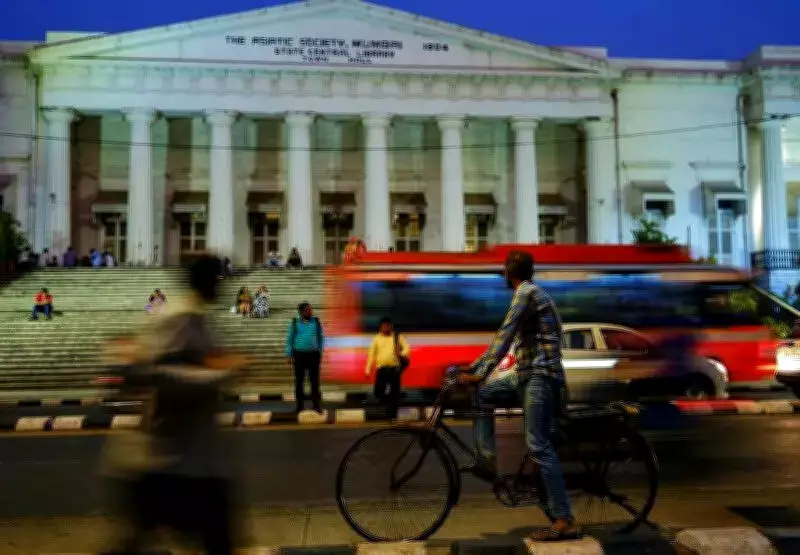
The Asiatic Society holds a distinguished place in India's intellectual history, having been established in 1804 by Sir James Mackintosh, who served as the Recorder or King's Judge for Bombay (as the city was then called). The society was founded with the noble mission of promoting research and knowledge in arts, science, and culture regarding India, a purpose it continues to serve more than two centuries later.
The current legal proceedings represent not just a dispute over election mechanics, but a struggle for the stewardship of an institution that has contributed significantly to India's cultural and academic landscape. All parties await Friday's formal orders with keen interest, as the High Court's decision will determine the path forward for this venerable organization.