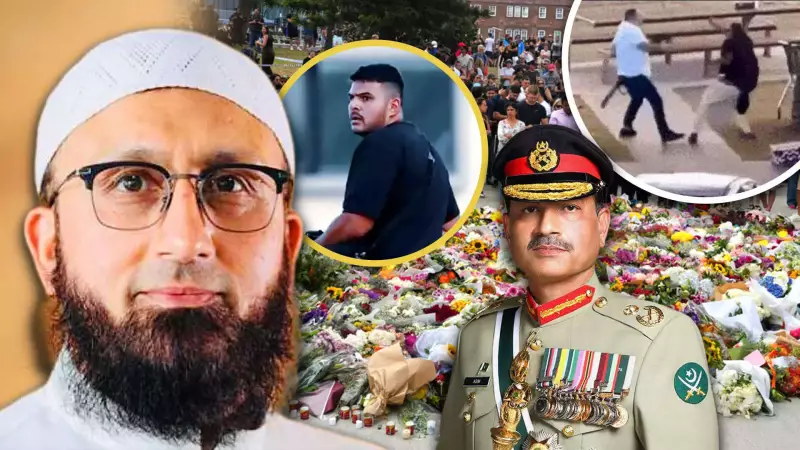
A Muslim cleric based in Brisbane has delivered a stark and revealing comparison of how minorities are treated in Pakistan versus Australia, sparking a significant conversation about religious tolerance and extremism. The remarks, made by Imam Uzair Akbar of the Holland Park Mosque in Brisbane, highlight a disturbing reality for non-Muslims in Pakistan while praising Australia's protective framework.
Imam's Stark Contrast: Australia's Tolerance vs Pakistan's Reality
In his speech, Imam Uzair Akbar drew a sharp line between the two nations' societal responses. He pointed out that Australia possesses a very high level of tolerance towards its minority communities. To illustrate this, he suggested that if a minority individual had carried out a terror attack similar to the Bondi incident in Pakistan, the country would have erupted in widespread riots. This hypothetical scenario underscores the fragile state of interfaith relations he attributes to Pakistan.
In contrast, the Imam described a grim fate for minorities in Pakistan. He stated that non-Muslim minorities would face collective violence and retribution as a community for the actions of an individual, a practice he clearly condemns. His words, including the phrase 'burn houses, murder people,' paint a picture of systemic vulnerability for religious minorities in the South Asian nation.

Confronting Extremism and Protecting Islam's Image
Beyond the comparison, Imam Uzair Akbar's address carried a crucial internal message for the Muslim community. He identified radical views as harmful to the global image of Islam and urged believers to confront such extremism at its earliest stages. This call to action places a significant responsibility on religious leaders and community members to safeguard their faith from being hijacked by violent ideologies.
His praise for Australia was centered on its robust mechanisms for protecting minority rights, suggesting it as a model where the state actively prevents communal backlash and upholds the rule of law for all citizens, regardless of faith.
Broader Implications and Unanswered Questions
The speech, delivered on December 26, 2025, has resonated far beyond the mosque's walls, raising several critical questions for open societies worldwide. It forces a examination of what is discussed behind closed doors in religious institutions and the weighty responsibility borne by religious leaders in shaping community attitudes.
Furthermore, it prompts a deep debate on the limits of tolerance in liberal democracies and how nations can balance freedom of expression with the need to counter hateful rhetoric that can lead to real-world violence. The Imam's expose is not just a critique of Pakistan but a mirror held up to all societies grappling with pluralism and cohesion.