

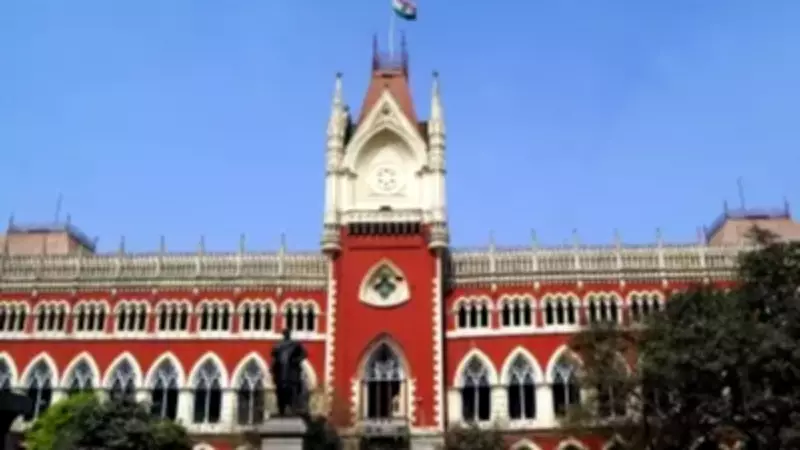
Calcutta High Court Intervenes in Election Commission's 'Troublemaker' Designation
In a significant judicial intervention, the Calcutta High Court has granted an interim stay on an Election Commission (EC) order that had identified 800 individuals as 'troublemakers' until June 30. The court, in its observations on Wednesday, strongly criticized the EC for issuing what it termed a 'blanket direction' that effectively treated citizens as potential disruptors of the electoral process.
Court's Critique of Election Commission's Authority
The division bench, comprising Chief Justice Sujoy Paul and Justice Partha Sarathi Sen, emphasized that the EC's general power of superintendence and control under Article 324 of the Constitution is not absolute. "The general power of superintendence and control of EC under Article 324 is subject to other law," the High Court stated, reiterating a precedent set by the Supreme Court. This clarification underscores the legal boundaries within which the Election Commission must operate, ensuring its actions align with established statutory frameworks.
Background and Legal Challenge
The controversy stems from an April 21 order issued by a police observer, which asserted that the named individuals were 'actively involved in intimidating voters and creating disturbances in the electoral process.' This order prompted the filing of a Public Interest Litigation (PIL) before the Chief Justice's bench, challenging the EC's directive. Notably, many of the 800 people listed are elected representatives, raising concerns about the potential misuse of such designations in the political arena.

Scope of the Interim Stay
While granting the interim stay, the High Court provided a crucial clarification: the stay does not prevent law enforcement agencies from taking action against anyone who commits an offence under the Bharatiya Nyaya Sanhita (BNS) or the Representation of the People Act. This nuanced ruling ensures that genuine cases of electoral misconduct can still be addressed, while preventing the blanket labeling of citizens without due process.
Implications for Electoral Governance
This decision highlights the judiciary's role in balancing electoral integrity with individual rights. By staying the EC's order, the Calcutta High Court has reinforced the principle that citizens cannot be preemptively categorized as troublemakers based on broad directives. The case is set to have broader implications for how election authorities exercise their powers, emphasizing the need for specificity and legal adherence in maintaining order during polls.
The interim stay will remain in effect as the court continues to hear the PIL, with further proceedings expected to delve deeper into the constitutional and legal aspects of the EC's actions. This development marks a pivotal moment in the ongoing discourse on electoral reforms and the protection of democratic rights in India.






